




When you wander through the Shikumen alleys of Shanghai, you hear a soft and gentle “Nong Hao Ya” (Hello) between neighbors; when you walk into a street shengjian mantou stall, the boss asks you with a smile “Yao Ji Zhi Ya” (How many do you want?); when you rest in an old teahouse, you hear the melodious singing in Shanghainese — what you hear is the most down-to-earth sound of Shanghai, and also the “living fossil” of Haipai Culture — Shanghainese. For foreign visitors, the charm of Shanghai lies not only in the modernity of the Bund and the elegance of Yu Garden, but also in the authentic warmth hidden in this local dialect. Learning a few words of Shanghainese and stepping into the world of Shanghainese allows you to truly understand the texture of Shanghai and touch the most authentic soul of this city.
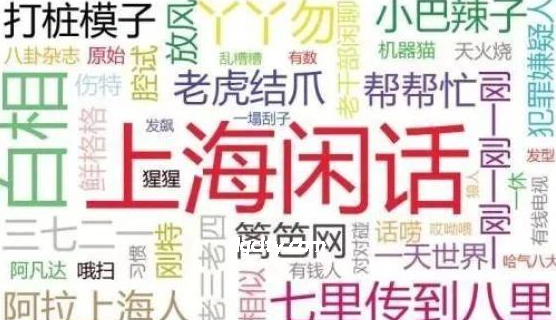
Shanghainese, also known as Shanghai dialect or Shanghai Xianhua, is a representative dialect of the Shanghai sub-dialect in the Taihu Lake area of the Wu dialect region of the Sino-Tibetan language family. It is also one of the three major dialects in China (Mandarin, Cantonese, and Shanghainese). As of 2012, the number of speakers was about 15.86 million. Its birth and development are deeply branded with the urban changes of Shanghai, and it is a vivid witness to the collision and integration of local Culture and foreign culture since Shanghai opened its port a hundred years ago. As early as the Southern Song Dynasty, when a settlement center was formed in the Shanghai area, Shanghainese gradually took shape based on the Songjiang dialect. It was deeply influenced by Jiaxing dialect in the Ming Dynasty and replaced by Suzhou dialect as the authoritative dialect in the Qing Dynasty. It was not until Shanghai opened its port in modern times that it gradually established its own dialect authority and became the fastest developing and most dominant dialect in the Taihu Lake area of the Wu dialect region.
After Shanghai opened its port in 1843, a large number of immigrants from Jiangsu and Zhejiang poured in. The elegance of Suzhou dialect and the straightforwardness of Ningbo dialect were integrated into Shanghainese. Among them, Ningbo dialect directly influenced the first-person plural “Ala” (we) in Shanghainese — originally, “we” in Shanghainese was pronounced “Wo Nong”, and now “Ala Shanghai Ning” (we Shanghainese) has become the most distinctive identity symbol of Shanghainese. At the same time, the influx of Western Culture also injected new vitality into Shanghainese. Many foreign words were directly transliterated or transformed, such as “Kafei” (coffee), “Sela” (salad), “Maikefeng” (microphone), and “Ga San Hu” (derived from the English word “gossip”, meaning to chat). These words not only retain traces of foreign languages but also integrate the soft tone of Shanghainese, becoming a direct embodiment of the inclusiveness of Haipai culture. The 1930s and 1940s were the golden age of Shanghainese. At that time, Shanghainese was not only a tool for daily communication but also widely used in artistic forms such as Shanghai Opera, Huaji Opera, and Pingtan, becoming an important symbol of the prosperity of Shanghai culture.
The charm of Shanghainese lies in its softness, gentleness, vividness, and vitality, which is full of the down-to-earth atmosphere of old Shanghai as soon as you speak it. Different from the toughness of northern dialects, Shanghainese has a soft tone, a slow speed, and a delicate pronunciation, which sounds like a spring breeze, so it is also known as one of the representatives of “Wu Nong Ruan Yu” (soft Wu dialect). Shanghainese vocabulary is very distinctive, mostly vivid, close to life, and full of urban wisdom. To praise someone for being great, you don’t say “Li Hai” (great), but “Jie Gun” (awesome), which is down-to-earth and powerful; to say someone is unreliable in doing things, you say “Chai Lan Wu” (mess up), which is straightforward and a bit playful; to describe bright colors, you use reduplicated words like “Xue Xue Bai” (as white as snow), “Xue Xue Hong” (as red as blood), “Bi Bi Lu” (as green as jade), which are very vivid; even to express the meaning of “very”, there are many ways such as “Xie Qi” (very), “Jiao Guan” (very), “Lao” (very), and the sentence pattern “Wu Yao Te Ling Guang Wo” (it’s extremely good) can describe something as good as it gets.
For foreign visitors, there is no need to be proficient in Shanghainese. You only need to learn a few common phrases to quickly narrow the distance with local Shanghainese and make your trip more warm and interesting. In daily communication, “Nong Hao” (Hello) is the most basic greeting. Whether you enter a store, restaurant, or ask for directions, a “Nong Hao” can always get a friendly response from others; a “Fan Chi Guo Fa?” (Have you eaten?) when meeting is not a real inquiry, but the most warm greeting from Shanghainese, which is more down-to-earth than “Hello”; after receiving help, a “Xie Xie Nong” (Thank you) or “Nan Wei Nong” (Trouble you) is sincere and appropriate; when saying goodbye, “Zai Hui” (Goodbye) or “Ming Chao Jian” (See you tomorrow) is simple and kind. When shopping or dining, “Ji Duo Tong Dian?” (How much is it?), “Yao Yi Zhi” (I want one), “Wu Yao La” (No spicy), these simple phrases can make your communication smoother and let the boss feel your sincerity.

When you come to Shanghai, in addition to learning common Shanghainese phrases, you can also step into various scenarios to experience the charm of Shanghainese culture in an immersive way. Shikumen alleys are the best places to experience Shanghainese. In the old alleys of Xintiandi, Tianzifang, and Sinan Road, you can often hear old Shanghainese chatting and greeting each other in Shanghainese. You can take the initiative to strike up a conversation, learn a few simple words of Shanghainese, and feel the simple warmth between neighbors. The Shanghainese corners that open regularly every week are even better places for Chinese and foreign tourists to learn Shanghainese. Volunteers will patiently teach Shanghainese vocabulary, nursery rhymes, and common phrases. Here you can also meet like-minded friends and feel the fun of Shanghainese together.
Artistic forms based on Shanghainese, such as Shanghai Opera and Huaji Opera, are important windows to understand Shanghainese culture. Shanghai Opera, originally named Shen Qu, has a soft and gentle tune and mostly tells the down-to-earth stories of old Shanghai. A sentence “Wei Ni Da Kai Yi Shan Chuang” (Open a window for you) can take you into the ups and downs of old Shanghai; Huaji Opera interprets life’s interesting stories in Shanghainese in a humorous way. Even if you can’t understand all the lines, you can still feel the humor and vividness of Shanghainese through the actors’ body movements and expressions. In addition, the Shanghai Museum and China Art Museum sometimes hold Shanghainese culture exhibitions, which introduce the history and development of Shanghainese in detail through words, pictures, audio, and other forms, allowing you to understand this unique cultural heritage more systematically.
Nowadays, with the popularization of Mandarin, the inheritance of Shanghainese is facing certain challenges. Many young Shanghainese are gradually losing their ability to listen to and speak Shanghainese, and many authentic Shanghainese words can only be spoken fluently by the older generation. But fortunately, more and more people are beginning to realize the preciousness of Shanghainese, and the calls for “protecting Shanghainese” and “inheriting Shanghainese culture” are getting louder and louder. Some Shanghai Metro lines have added Shanghainese announcements, schools have set up Shanghainese interest classes, communities hold Shanghainese nursery rhyme singing activities, and many Shanghainese bloggers share Shanghainese knowledge on new media platforms, making this soft local dialect echo again in the streets and alleys of Shanghai.
Shanghainese is not an obscure “local dialect”, but the root of Shanghai culture, the urban memory hidden in the down-to-earth atmosphere, and the warmth and wisdom of Shanghainese in dealing with others. As a foreign visitor, your greeting in Shanghainese can not only get a friendly response but also feel the inclusiveness and warmth of Shanghai. During your trip in Shanghai, you might as well slow down, learn a few words of Shanghainese, step into the world of Shanghainese, listen to the stories of old Shanghai, and feel the essence of Haipai culture. I believe this soft local dialect will become the warmest and most unforgettable memory of your trip to Shanghai, making you truly fall in love with this city that has both modern charm and down-to-earth warmth.



暂无评论内容