




Deep in the prosperity of Shanghai, a modern metropolis, hides a Jiangnan secret that has gone through more than 450 years of time — Yuyuan Garden. Located at No. 168 Fuyou Road, Huangpu District, adjacent to the Old City God Temple and Yuyuan Tourist Mart, it is the most complete and representative classical garden of the Ming and Qing dynasties in Shanghai, and a model of the perfect integration of “classical elegance” and “urban charm” in Haipai Culture. For foreign visitors, Yuyuan Garden is not only a garden, but also a window to understand Chinese Jiangnan garden art and experience Shanghai’s traditional Culture. Wandering here, pavilions, terraces, winding paths, street food and folk customs complement each other, allowing you to encounter a unique millennium charm and urban warmth belonging to Shanghai in the noisy city.
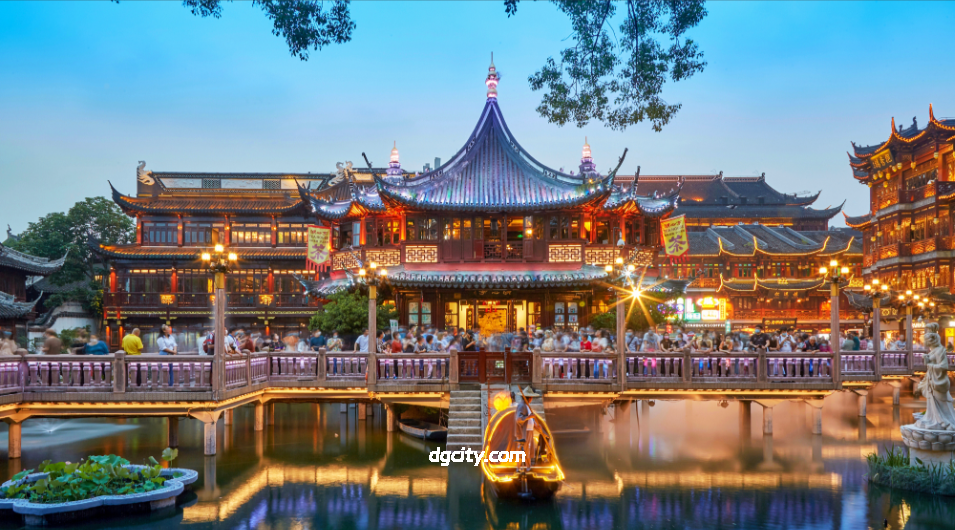
The history of Yuyuan Garden dates back to the Jiajing and Wanli reigns of the Ming Dynasty, with a long history of more than 450 years. Together with Luxiang Garden and Rishe Garden, it is known as the “Three Major Gardens of Shanghai in the Ming Dynasty”, ranking first among the existing five major classical gardens in Shanghai. It was listed as the second batch of national key cultural relics protection units in 1982 and rated as a national AAAA-level scenic spot in 2021. Initially, it was a private garden built by Pan Yunduan, the administrative commissioner of Sichuan in the Ming Dynasty, to honor his father and let him spend his old age in peace. Taking the meaning of “pleasing the elderly parents”, it was named “Yuyuan Garden”. Pan Yunduan invited Zhang Nanyang, a famous garden designer in the Ming Dynasty, to carefully design it. When completed, it covers an area of more than 70 mu (about 4.67 hectares), making it one of the top gardens in Jiangnan at that time. Later, the Pan family declined, and Yuyuan Garden changed hands several times, experienced damage and restoration during wars, and finally formed the unique pattern of integrating temple, garden and market, with both the tranquility and elegance of a classical garden and the prosperity of an urban business district.
As an outstanding representative of Jiangnan classical gardens, Yuyuan Garden perfectly interprets the artistic style of “seclusion, beauty, delicacy and exquisiteness” of southern gardens in the Ming and Qing dynasties. It skillfully uses garden design techniques such as borrowed scenery, leaking scenery, framed scenery and opposite scenery, integrating the natural pattern of north mountains and south water into a limited space, forming a unique experience of “changing scenery with each step, one scene at a time”. Covering an area of more than 30 mu (about 2 hectares), the garden is narrow and long from north to south, with a knife-shaped plane layout. It uses the technique of first opening and then closing, first promoting and then restraining, with rockeries, strange stones, winding water and pavilions as the core, matched with ancient trees, Ming and Qing furniture, celebrity calligraphy and paintings, Clay Sculptures and brick carvings and other cultural relics, embodying the essence of Chinese traditional Culture and art. The restored Yuyuan Garden not only preserves the grand pattern of harmony and coexistence emphasized by traditional classical gardens, but also integrates the functionality, practicality and decoration of Haipai gardens, becoming a microcosm of the integration of Jiangnan gardens and Haipai culture.
When visiting Yuyuan Garden, there are countless iconic scenic spots worth seeing, each hiding ingenuity and stories. Among them, the most famous is Yulinglong, one of the “Three Major Strange Stones in Jiangnan”, which is as famous as Guanyun Peak in Suzhou and Zouyun Peak in Zhejiang, and can be called the treasure of Yuyuan Garden. Carved from Taihu stone, Yulinglong is transparent all over, perfectly fitting the Jiangnan stone appreciation standards of “wrinkled, thin, leaky and transparent”. What’s more wonderful is that if you light an incense burner at the bottom of the stone, smoke will overflow from all the holes on the stone; if you pour a basin of water on the top of the stone, water drops will drip from each hole, which is a garden wonder and a must-visit place for foreign tourists to take photos.
In addition to Yulinglong, the Grand Rockery in Yuyuan Garden is also very distinctive. It is the only surviving work of Zhang Nanyang, a famous rockery builder in the Ming Dynasty. Stacked with Huangshi from Wukang, Zhejiang, the rockery has steep mountains and distinct layers, with winding paths built in the mountains. Climbing to the top, you can overlook the whole garden. Pan Yunduan once praised it as “steep and very enjoyable to watch” in “Notes on Yuyuan Garden”. In front of the Grand Rockery is Yangshan Hall, with a plaque hanging high in the hall that reads “Here are lofty mountains and steep ridges”. Tourists can lean on the railing to look far away and enjoy the beautiful scenery of the Grand Rockery. Above Yangshan Hall is Juanyu Tower, whose name “Juanyu” is taken from the poem “Pearl curtains roll up the west mountain rain at dusk” in “Poem of Tengwang Pavilion”. Climbing the tower, you can skillfully integrate the urban scenery outside the garden with the garden scenery inside, feeling the unique artistic conception of “urban mountain forest”.
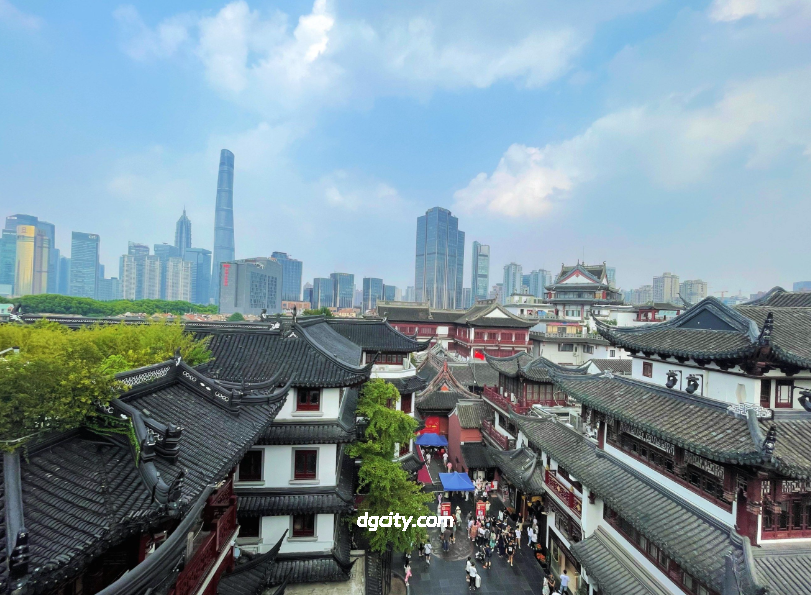
The six major scenic areas in Yuyuan Garden have their own characteristics and complement each other, connecting the essence of the whole garden. Sansui Hall Scenic Area is the core area after entering the garden. As the main building of the scenic area, Sansui Hall has a plaque “Sansui Hall” hanging in the middle, which is taken from the harvest allusion of “three ears of grain on the beam”. There are also two plaques hanging in the hall: “Urban Mountain Forest” and “Lingshi Jingshi”, as well as “Notes on Yuyuan Garden” written by Pan Yunduan. In the early Qing Dynasty, it was the office of the Shanghai county government, and later became the meeting place of the Bean and Rice Industry Guild. Wanhua Building Scenic Area is small and exquisite, with Yule Pavilion, Double Corridor and Wanhua Building scattered. Yule Pavilion is taken from Zhuangzi’s “Autumn Water”, where tourists can lean on the pavilion to watch the stream. The Double Corridor is separated by a wall in the middle, allowing tourists to walk on both sides. The “Beauty’s Waist” Taihu stone in the corridor has a flexible shape and is very ornamental; the ancient ginkgo tree in front of the building has a history of more than 400 years, which is said to have been planted by Pan Yunduan himself, witnessing the centennial changes of Yuyuan Garden.
Dianchun Hall Scenic Area carries red memories. Dianchun Hall was built by Fujian sugar and flower merchants in the Qing Dynasty, and its name “Dianchun” is taken from Su Shi’s poem. During the Shanghai Small Sword Society Uprising in 1853, the leader Liu Lichuan once set up a command post here, which is still one of the people’s revolutionary memorial sites today. Fengluan Wuyin (Dachang Platform) and Hexu Hall in the scenic area are also very distinctive. The stone pillars of Dachang Platform are carved with couplets depicting the scenery of the four seasons. Hexu Hall faces the mountain and backs the water, with a pleasant climate. The tables, chairs and desks in the hall are all made of banyan tree roots, which are exquisite and unique. In addition, the Jiyu Water Corridor in Huijing Tower Scenic Area is the longest water corridor in Jiangnan gardens, 100 meters long, connecting Huijing Tower and Hanbi Tower. Tourists can stroll along the corridor to enjoy pavilions and watch fish playing; Yuhua Hall in Yuhua Hall Scenic Area was once Pan Yunduan’s study, where precious items such as four treasures of the study and Ming Dynasty red sandalwood painting tables are displayed; the Ancient Opera Stage and Guantao Tower in the Inner Garden Scenic Area are also good places to feel the cultural heritage of Yuyuan Garden.
For foreign visitors, the charm of Yuyuan Garden lies not only in its garden scenery, but also in its strong urban charm and characteristic food. The City God Temple Business District around Yuyuan Garden is a gathering place of Shanghai’s traditional food. The characteristic snacks here, such as Nanxiang Xiaolongbao (steamed dumplings), pear paste candy, five-spice beans and pork ribs with rice cakes, carry the taste memory of Shanghainese for hundreds of years and are an experience not to be missed by foreign visitors. Nanxiang Steamed Bun Shop in Yuyuan Tourist Mart is one of the most famous snack shops in Shanghai. The Nanxiang Xiaolongbao here has thin skin, juicy filling, fresh and delicious taste, including fresh meat, crab roe and other flavors. It is made and steamed on site, with a strong aroma. There are always endless tourists queuing up to taste it. You might as well wait patiently to feel the most authentic Shanghai flavor.
In addition, the folk cultural activities of Yuyuan Garden are also very distinctive, the most famous of which is the Yuyuan Lantern Festival. It has been popular since the Ming Dynasty and has now been included in the list of national intangible cultural heritage. During the Lantern Festival every year, Yuyuan Garden is decorated with lanterns and colored streamers, and various exquisitely shaped lanterns light up the whole garden, including traditional zodiac lanterns, folk lanterns and creative lanterns integrated with modern elements, attracting millions of Chinese and foreign tourists to watch, which is very lively. In addition, Yuyuan Garden regularly holds cultural activities such as Kunqu Opera performances and calligraphy and painting exhibitions. In 2023, it even restored the Yuyuan Calligraphy and Painting Charity Association composed of Haipai painters, allowing tourists to feel the charm of Chinese traditional culture while enjoying the garden scenery.
Mastering practical travel tips can make your trip to Yuyuan Garden smoother. The opening hours of Yuyuan Garden are 8:30-17:00 (it may close early to 16:30 in winter). It is recommended to reserve 2-3 hours for the tour and avoid the peak period of holidays, so that you can not only better appreciate the garden scenery, but also reduce the waiting time in queues. Tickets can be purchased online through the “Shanghai Yuyuan” WeChat official account or on site at the ticket office at the South Gate of Yuyuan Garden. Foreign tourists can purchase tickets with their passports. There are multilingual guide signs in the garden, and you can also rent multilingual audio guides or sign up for professional tour groups to deeply understand the historical stories of each scenic spot. The surrounding traffic is convenient. Take Metro Line 10 or 14 to Yuyuan Station and walk there. There are also several Parking lots around, suitable for self-driving.
After more than 450 years of changes, Yuyuan Garden has always adhered to the elegance of Jiangnan gardens and embraced the urban charm of Shanghai. It has both the poetic and picturesque beauty of pavilions and terraces, and the human fireworks of characteristic food; it has both the profound heritage of history and culture, and the vivid vitality of folk customs. For foreign visitors, a trip to Yuyuan Garden can not only let you appreciate the artistic essence of Chinese Jiangnan gardens, taste the authentic traditional Shanghai food, but also understand the connotation of Shanghai’s traditional culture and feel the inclusiveness of Haipai culture. You might as well slow down, walk into the winding paths of Yuyuan Garden, encounter the elegance of pavilions and terraces, taste the warmth of urban fireworks, and let this charm spanning hundreds of years become the most unforgettable memory of your trip to Shanghai.




暂无评论内容