




When you come to Shanghai, if you want to find the most representative local flavor, Nanxiang Xiaolongbao is definitely an unmissable culinary feast. Born in Nanxiang Town, Jiading District, with a history of nearly 150 years, this snack is not only the breakfast sentiment of Shanghainese, but also an intangible cultural heritage treasure carrying Jiangnan food Culture. It attracts countless foreign tourists to come specially, just to taste the delicate and juicy flavor made with ingenuity. As one of the four traditional snacks in Shanghai, Nanxiang Xiaolongbao is famous for its four major characteristics: thin skin, large filling, juicy soup and beautiful shape. Every detail reflects the delicacy and ingenuity of Jiangnan people, making it an important window for foreign tourists to understand the fireworks of Shanghai.
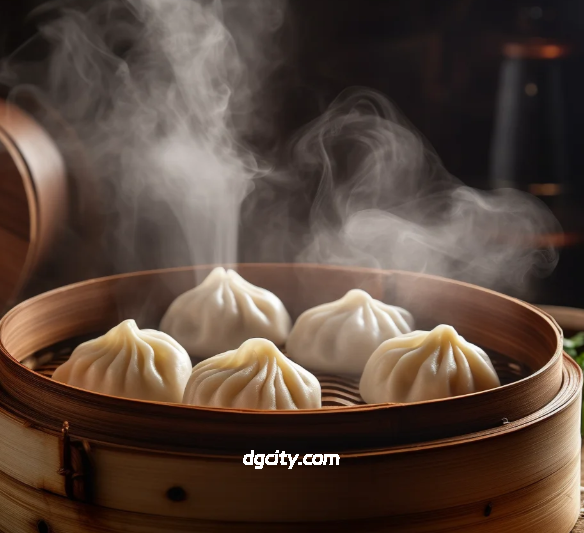
The historical origin of Nanxiang Xiaolongbao can be traced back to the tenth year of Tongzhi in the Qing Dynasty (1871 AD). At that time, Huang Mingxian, the owner of Rihua Xuan Dim Sum Shop in Nanxiang Town, improved the popular large meat buns in the local area. He adopted the method of “thick filling and thin skin, reducing the size from large to small”, using unfermented high-gluten flour as the skin, and pork leg meat and pork skin jelly as the filling, and finally created this exquisite delicacy, which is the initial form of Nanxiang Xiaolongbao. In 1900, Wu Xiangsheng, the second-generation heir, opened a Nanxiang Xiaolongbao shop in Shanghai City God Temple, making this snack known beyond Nanxiang Town. Since then, after the master-apprentice inheritance of six generations of heirs, the production technology has been continuously improved. In 2014, it was successfully selected into the national list of traditional pasta making techniques, becoming a bright business card of Shanghai food Culture. For more than a hundred years, Nanxiang Xiaolongbao has always adhered to traditional craftsmanship. Even with the changes of the times, its pure flavor has never changed, becoming a taste link connecting Shanghai’s past and present.
To truly understand Nanxiang Xiaolongbao, you must first understand its production process. The birth of each Xiaolongbao is inseparable from the ingenuity of the masters. From material selection to wrapping and steaming, every step has strict standards and no room for carelessness. The production of the skin is one of the essences of Nanxiang Xiaolongbao. High-gluten flour with a protein content of 12%-13% is selected, mixed with room-temperature soft water and a little salt, stirred and kneaded into a “three-smooth dough” (smooth basin, smooth hands, smooth dough) in three times, covered with a damp cloth and left to proof for 30 minutes to fully relax the gluten. Then it is rolled into a round skin with “thin edges and thick middle” – the edges are as thin as paper to facilitate pleating, and the middle is slightly thick to stably hold the filling and soup. Looking against the light, the skin is crystal clear, and even the lines of the fingers can be seen, which the old masters call “glass skin”. When rolling the skin, the masters rotate their wrists, and the rolling pin moves flexibly. Each skin has a diameter of about 6 centimeters, a thickness of only 1.5 millimeters, and a weight of about 8 grams. This precise control can only be mastered after years of practice.
The preparation of the filling determines the freshness of Nanxiang Xiaolongbao, and the core lies in the perfect matching of “pork skin jelly” and “intermuscular pork”. The filling is made of specially supplied pork leg intermuscular meat, with a strict fat-to-lean ratio of 3:7, which is lean but not dry, fat but not greasy. After being chopped by hand, it retains a little granularity of meat, which is more chewy than machine-ground meat filling. Then add minced ginger, cooking wine, light soy sauce, a little white sugar and other seasonings, stir in one direction until “tough”, so that the meat filling fully absorbs the seasonings and water, becoming sticky and elastic. The secret of the soup lies in the crystal clear pork skin jelly – select pork leg bones and pork trotters, add green onions, ginger and cooking wine, bring to a boil over high heat to skim off the foam, then simmer slowly over low heat for 4 hours to make a milky white thick soup. After filtering, refrigerate for 6 hours to solidify into amber pork skin jelly, cut into small cubes and mix into the meat filling. The ratio of pork skin jelly to meat filling is controlled at 1:3. Too much will make the soup overflow, and too little will make it dry. Only the right matching can make the steamed Xiaolongbao full of soup.
The wrapping link is even a “ballet on the fingertips”, testing the hand skills of the masters. Take a proofed skin and put it in the palm of your hand, pick about 15 grams of filling with chopsticks and gently place it in the center of the skin. Dip your fingers in a little water and apply it to the edge of the skin to increase stickiness. Then hold the skin with your left hand, pinch the edge of the skin with your right thumb and index finger, and rotate clockwise to pleat. Each Xiaolongbao must be pinched with 18-22 pleats. The pleats are even and neat, about 0.3 centimeters wide, the closing is tight, and a small “belly button” is left on the top for ventilation, so that it will not crack during steaming. The final formed Xiaolongbao is shaped like a pagoda, exquisite and delicate, like a budding chrysanthemum, with both appearance and taste. An experienced master can wrap 6 Xiaolongbao in one minute, and each has exactly the right number of pleats, which can be called a work of ingenuity. An apprentice often needs three years of repeated practice in rolling skin, chopping filling and wrapping pleats to become a master and wrap Xiaolongbao independently.
The steaming link is the key to “locking freshness”, which emphasizes “steaming quickly over high heat”. One more second will make the skin old, and one less second will make the filling raw. Add water to the steamer and bring to a boil over high heat. Spread pine needles (traditional method, anti-stick and with a natural fragrance, now often replaced by oil paper) in the steamer. Arrange the wrapped Xiaolongbao evenly, keeping a distance of 1 centimeter between each to avoid sticking after steaming. Cover the pot tightly and steam over high heat for 3-4 minutes. Adjust the time according to the number of steamer layers. The more layers, the longer the steaming time, but it will not exceed 10 minutes at most. To judge whether the Xiaolongbao is cooked, just look at the color – the cooked Xiaolongbao has a milky white skin with a slight yellowish tinge, the “belly button” on the top is slightly open, and it can rebound quickly when you press the side with your finger. At this time, it is the best time to eat. Lift the lid of the pot, and it is steaming hot with a strong aroma, instantly awakening the taste buds.
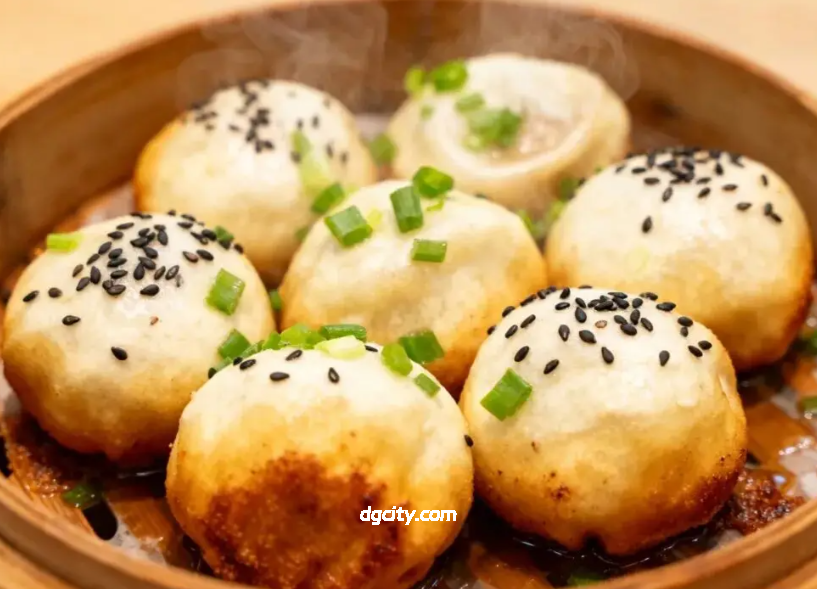
For foreign tourists, the correct way to eat can truly appreciate the deliciousness of Nanxiang Xiaolongbao, avoid wasting soup or being scalded. Shanghainese have a proverb: “Lift it gently, move it slowly, open the window first, then drink the soup”, which is the essence of eating Nanxiang Xiaolongbao. First, gently hold the top of the Xiaolongbao by the pleats with chopsticks (the skin here is slightly thicker, not easy to break), and slowly move it to the vinegar plate to avoid soup spilling; then, gently poke a small hole at the “belly button” on the top of the Xiaolongbao, which is “opening the window”. Blow it first to cool down the heat and soup, then lean over to your mouth and gently suck the soup. This sip of soup is the soul of Nanxiang Xiaolongbao, rich and fresh, with the aroma of meat and pork skin jelly, moderately salty and sweet, making people memorable; after sucking the soup, dip the Xiaolongbao in a little rice vinegar, serve with a slice of shredded ginger (to relieve greasiness and remove fishy smell), and chew slowly. The skin is thin and elastic, and the filling is firm and chewy. The sourness of vinegar, the spiciness of ginger, the freshness of meat and the sweetness of soup blend in the mouth, with rich layers, making every bite intoxicating. Remember not to take a big bite, which will not only easily burn your mouth, but also make all the soup flow away, wasting this ingenuity flavor. Only by chewing slowly can you taste the unique charm of Nanxiang Xiaolongbao.
When coming to Shanghai, if you want to taste the most authentic Nanxiang Xiaolongbao, the following shops are definitely worth visiting by foreign tourists. Each adheres to traditional craftsmanship, has an authentic flavor, and is conveniently located for easy access. The first one is Nanxiang Mantou Dian (City God Temple Store), located at No. 85 Yuyuan Road, Huangpu District, inside the City God Temple Scenic Area. It is a century-old shop and the most popular shop among foreign tourists. The shop has three floors: the first floor is a take-out window, and the second and third floors are for dine-in. It is recommended to try the classic pork Xiaolongbao and crab roe Xiaolongbao (supplied during the hairy crab season from September to December every year, mixed with freshly picked crab meat and crab roe from Yangcheng Lake into the meat filling, which is more fresh). The average consumption is 50-80 yuan, and the business hours are 8:30-21:00. Take Metro Line 10 to Yuyuan Station and walk for 5 minutes to reach it.
The second one is Nanxiang Mantou Dian (Guyi Garden Store), located inside Guyi Garden, Nanxiang Town, Jiading District. This is the birthplace of Nanxiang Xiaolongbao, with the most authentic flavor. All Xiaolongbao in the shop are hand-wrapped and steamed on the spot, allowing tourists to watch the masters’ wrapping process up close and feel the charm of intangible cultural heritage skills. It is recommended to try the pork Xiaolongbao, paired with the quiet scenery of Guyi Garden, eating while enjoying, which has a unique charm. The average consumption is 40-60 yuan. Take Metro Line 11 to Nanxiang Station, then transfer to a bus or take a taxi to reach it, which is suitable for tourists who want to pursue the original flavor of Nanxiang Xiaolongbao.
The third one is Jiajia Tangbao (Tianjin Road Store), located at No. 506 Tianjin Road, Huangpu District, near Nanjing East Road Pedestrian Street. It is a hidden gem shop often visited by locals with high cost performance. The Xiaolongbao has thin skin and lots of soup, and the filling is solid. In addition to the classic pork flavor, there are also shrimp Xiaolongbao available. The average consumption is 30-50 yuan, and the business hours are 6:30-20:30. It is conveniently located. After visiting Nanjing East Road, you can go there to taste it and feel the breakfast sentiment of locals. In addition, Green Wave Pavilion (City God Temple Store) is also a good choice, located at No. 115 Yuyuan Road, Huangpu District, with an elegant environment. In addition to Xiaolongbao, you can also taste other traditional Shanghai snacks, which is suitable for tourists who like a delicate dining environment.
After tasting Nanxiang Xiaolongbao, foreign tourists can also visit the surrounding scenic spots to feel the fireworks and cultural heritage of Shanghai. If you dine at the City God Temple Store, you can visit Yuyuan Garden and City God Temple by the way. Yuyuan Garden is a representative of Jiangnan classical gardens, with pavilions, terraces, towers and rockeries, full of Jiangnan charm. City God Temple is a landmark of Shanghai’s folk Culture, where you can feel the local folk customs and buy characteristic souvenirs; if you dine at the Guyi Garden Store, you can visit Guyi Garden, a garden built in the Ming Dynasty, which is one of the oldest gardens in Shanghai. The garden is lush with plants and quiet scenery, suitable for casual strolling; if you dine at Jiajia Tangbao, you can go to Nanjing East Road Pedestrian Street and the Bund, feel the modernity and prosperity of Shanghai, check in iconic buildings such as Oriental Pearl TV Tower and Shanghai Tower, and start a Shanghai trip with both food and beautiful scenery.
Finally, here are some practical tips for foreign tourists to help you better experience the deliciousness of Nanxiang Xiaolongbao: First, Nanxiang Xiaolongbao needs to be ordered, steamed and eaten while hot. If it cools down, the soup will solidify and the taste will be greatly reduced; second, be careful of scalding when eating, especially the soup, which must be blown cool before sucking; third, it is better to serve with rice vinegar and shredded ginger, which can not only relieve greasiness, but also neutralize the saltiness and freshness of the meat filling; fourth, most shops have English menus. If you have any questions, you can consult the staff at any time, and they will patiently help you; fifth, shops may have long queues during peak seasons (such as holidays and hairy crab season), so it is recommended to go in advance to avoid delaying your trip.
Century-old ingenuity, inherited in one bite. Nanxiang Xiaolongbao is not only a delicacy, but also a cultural symbol of Shanghai, carrying the fireworks of Shanghai and the delicate sentiment of Jiangnan people. It is hoped that every foreign tourist can feel the unique charm of Shanghai in this bite of thin-skinned and juicy Xiaolongbao, leave an unforgettable taste memory, and let Nanxiang Xiaolongbao become the warmest taste impression in your Shanghai trip.




暂无评论内容