




When you wander through the Shikumen alleys of Shanghai or stroll along the bright lights of the Bund, the best way to touch the warmth and cultural heritage of this city is to taste an authentic Shanghainese local cuisine. As an integral part of Shanghai’s regional Culture, the traditional cooking skills of Shanghai local cuisine have long been included in the list of national intangible cultural heritage. With its unique style of “rich sauce, salty with a touch of sweetness, and oily but not greasy”, it has become a vivid business card of Shanghai-style Culture and an important window for foreign travelers to understand Shanghai. This guide will take you into the cooking world of Shanghainese local cuisine, unlock the essence of its skills, recommend immersive experience venues, and let you feel the craftsmanship and warmth of Shanghai while savoring the delicious food.
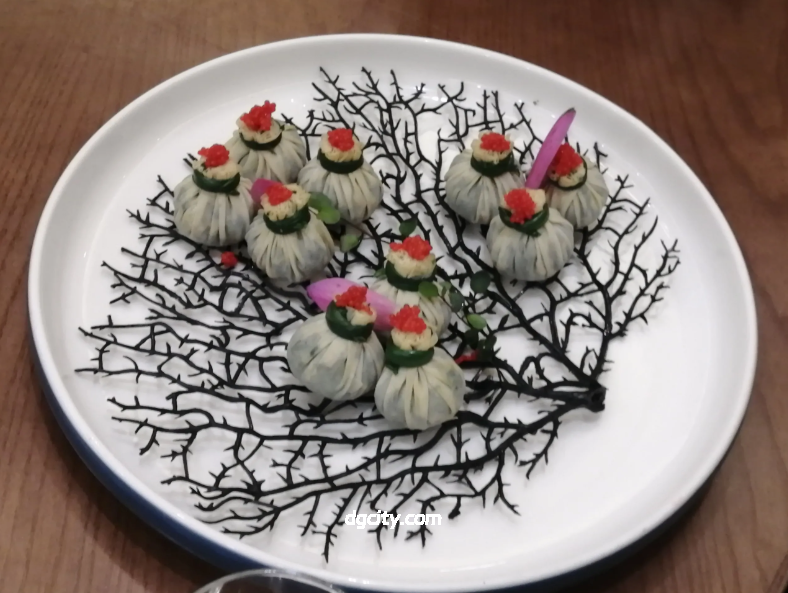
The cooking skills of Shanghai local cuisine originated in the late Qing Dynasty. With the prosperity of industry and commerce after Shanghai opened its port, it integrated the strengths of many cuisines such as Huizhou cuisine, Huaiyang cuisine and Wuxi-Suzhou cuisine, and gradually formed its own unique characteristics. After a hundred years of inheritance, it still retains the most authentic Shanghai flavor. Different from other Chinese cuisines, Shanghainese local cuisine does not pursue gorgeous plating, but pays more attention to the original flavor of ingredients and the precise control of heat. It emphasizes “freshness first and subtle taste”. Behind each dish is the chef’s reverence and persistence for skills. “Rich sauce” is its most distinctive label, which can be briefly summarized as more oil, strong taste, heavy sugar and bright color, but it is by no means greasy and heavy, but moderately rich with rich layers.
To understand the cooking skills of Shanghainese local cuisine, you must first master its core techniques, among which braising, stewing and pickling with fermented rice are the most classic, supporting half of Shanghainese local cuisine. Braising is the soul of Shanghainese local cuisine and the most distinctive technique reflecting the “rich sauce” feature, which has high requirements for heat and seasoning. Different from braising in other cuisines, Shanghainese braising pursues the effect of “natural thick sauce” without adding starch. Chefs need to match high-quality soy sauce with rock sugar and control the ratio of sugar to soy sauce, which can not only make the dishes bright red and glossy like glue, but also neutralize the saltiness and astringency of soy sauce and highlight the freshness and tenderness of ingredients. When cooking, you need to blanch the ingredients with high heat to remove fishy smell first, then simmer them slowly with low heat until they are soft and rotten, allowing the sauce to penetrate into the ingredients gradually, and finally collect the sauce with high heat to make it thick and cling to the ingredients, with a soft, glutinous and smooth taste and a salty and sweet flavor.
The most representative dish is Shanghainese braised pork belly. Choose streaky pork with alternating fat and lean meat, cut into uniform cubes, blanch them, stir-fry rock sugar to make sugar color, add soy sauce, rice wine and other seasonings, and simmer slowly with low heat for more than one and a half hours. The finished product is bright red in color, the fat melts in the mouth, the lean meat is soft and not dry, and the sauce is especially delicious with rice. Every bite can taste the warmth of Shanghai flavor.
Stewing technique highlights the “fresh but not dry” feature of Shanghainese local cuisine, which is mostly used for matching meat and vegetables, emphasizing “slow fire brings true taste”. When cooking, after cleaning the ingredients, put them into a casserole, add an appropriate amount of soup stock and seasonings, and stew slowly with low heat for several hours to fully integrate the nutrition and taste of the ingredients, making the soup thick and mellow, and the ingredients soft and boneless. The classic dish is stewed pork intestine with alfalfa. Cut the cleaned pork intestine into pieces, stew it with fresh alfalfa in a casserole. The pork intestine is soft and not greasy, and the alfalfa absorbs the fragrance of the pork intestine, with a refreshing taste. It has both the richness of meat and the freshness of vegetables, perfectly reflecting the matching wisdom of Shanghainese local cuisine.
Pickling with fermented rice is the most regional technique of Shanghainese local cuisine, full of the gentle charm of the Jiangnan water town. Its production process must use the unique fragrant fermented rice in Shanghai as the raw material, supplemented by aged Huadiao wine and other secret recipes, stored and filtered repeatedly to make fermented rice sauce. Then put the processed ingredients into the fermented rice sauce to soak, allowing the ingredients to fully absorb the fragrance of the fermented rice sauce. The finished product has a refreshing taste, rich wine fragrance and a light sweet aftertaste. Pickled chicken, pickled pork knuckle and pickled edamame are all classic pickled dishes. Especially pickled chicken, choose fresh three-yellow chicken, cook it and soak it in fermented rice sauce for more than 4 hours. The chicken is tender and juicy with a strong fermented rice fragrance. It is an excellent choice to taste Shanghainese local cuisine in summer and a must-try dish for foreign travelers to experience the refreshing flavor of Shanghainese local cuisine.
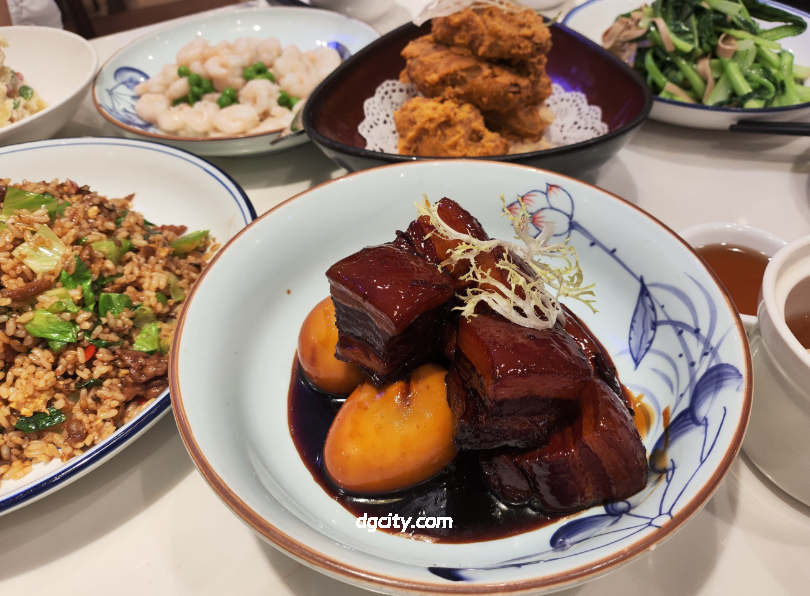
In addition to these three core techniques, the cooking of Shanghainese local cuisine also focuses on fresh ingredients and exquisite knife skills. Most of the ingredients of Shanghainese local cuisine are seasonal ingredients from Shanghai and surrounding areas of Jiangsu and Zhejiang. Fish are mainly from Jiangsu and Zhejiang provinces, with live fish as the best. There are live fish available for customers all year round, which are killed and cooked on the spot. Vegetables are local seasonal dishes such as Malantou, shepherd’s purse and Chinese little greens, with a soft, glutinous and refreshing taste, retaining the most authentic freshness of the ingredients. In terms of knife skills, Shanghainese local cuisine emphasizes delicacy and uniformity. Different dishes have different requirements for knife skills. For example, steamed mixed shreds of chicken, ham and pork requires cutting ham, chicken breast and pork into thin and uniform shreds with consistent thickness and crisp taste, which not only tests the chef’s knife skills, but also reflects the delicacy of Shanghainese local cuisine.
For foreign travelers who want to get close to the charm of Shanghainese local cuisine cooking skills, in addition to tasting the finished dishes, you can also walk into time-honored restaurants and cooking experience halls to experience the fun of cooking immersively. Jingyan Shanghai Cuisine (Xuhui Store), located on Nandan East Road, Xujiahui, is a time-honored Shanghainese restaurant loved by foreign travelers. The chefs in the restaurant are all inheritors of Shanghainese local cuisine with decades of experience. You can not only taste classic dishes such as authentic braised pork belly and black pepper eel clay pot rice, but also watch the chefs’ cooking process on site, and feel the essence of techniques such as braising and deep-frying up close.
In addition, Shanghai Old Restaurant is also a must-visit place. As one of the birthplaces of Shanghainese local cuisine, the chefs here adhere to traditional skills and constantly innovate. Classic dishes such as stewed sea cucumber with shrimp roe and eight-treasure duck are unique. The restaurant also regularly holds Shanghainese local cuisine cooking experience activities, allowing travelers to make a simple Shanghainese dish by themselves under the guidance of chefs and feel the fun of cooking.
If you want to systematically learn the cooking skills of Shanghainese local cuisine, Shanghai Local Cuisine Cooking Experience Hall is an excellent choice. There are professional Shanghainese chefs teaching here, and simple cooking courses are set up for foreign travelers. From ingredient processing, knife skill practice to heat control and seasoning skills, they guide patiently step by step, allowing you to master the production methods of simple dishes such as braised pork belly and sautéed shelled shrimps in a short time. You can also learn the cultural stories behind each dish and take Shanghai flavor and cooking skills home with you.
There are some small skills to help you better feel the flavor when tasting Shanghainese local cuisine. Most Shanghainese local dishes are salty with a touch of sweetness. Matching a bowl of rice can neutralize the taste and avoid being too sweet and greasy. When drinking, it is recommended to choose rice wine. The mellow taste of rice wine complements the freshness of Shanghainese local cuisine, which can better highlight the layers of the dishes. In addition, the matching of Shanghainese local dishes pays attention to the combination of meat and vegetables. For example, after eating delicious braised pork belly, matching a plate of stir-fried Chinese little greens can not only relieve greasiness, but also feel the collision of different ingredients’ flavors.
The cooking skills of Shanghai local cuisine are the inheritance of craftsmanship from generations of chefs and a vivid embodiment of the inclusiveness of Shanghai-style Culture. Each dish and each technique carries the history and warmth of Shanghai. For foreign travelers, tasting Shanghainese local cuisine is not only a taste enjoyment, but also a cultural experience; understanding the cooking skills of Shanghainese local cuisine can not only help you understand the taste of Shanghai, but also the warmth and persistence of this city. When you come to Shanghai, please slow down, walk into a Shanghainese restaurant, taste an authentic Shanghainese dish, feel the charm of cooking skills, and let the Shanghai flavor become the most unforgettable memory of your trip to Shanghai.











暂无评论内容