




At the western starting point of the Yangtze Three Gorges, at the mouth of Qutang Gorge in Fengjie County, Chongqing, Baidi Mountain stands alone on the Yangtze River, adjacent to the magnificent Qutang Gorge, forming a magnificent picture of “poetry coexisting with mountains and rivers”. This is the shooting location of the background pattern on the fifth set of 10-yuan RMB, the cultural core of Fengjie, known as the “City of Poetry”, and an excellent check-in place connecting natural wonders and thousands of years of history. The Baidi City & Qutang Gorge Scenic Area, with an area of 4.7 square kilometers, perfectly integrates cultural heritage with natural steepness, becoming the starting point to enjoy the magnificent beauty of the Three Gorges.
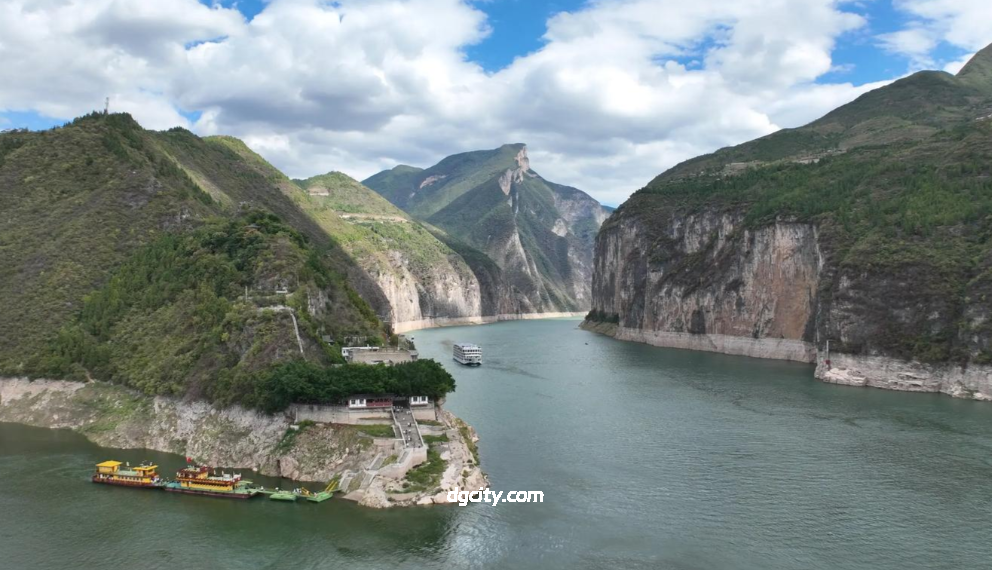
Baidi City is located on Baidi Mountain on the north bank of the Yangtze River. Originally named Ziyang City, it was built at the end of the Western Han Dynasty and got its name because Gongsun Shu built a city on the dangerous terrain and proclaimed himself Baidi. In 36 AD, people built Baidi Temple on Baidi Mountain to worship Gongsun Shu. In the 12th year of Jiajing in the Ming Dynasty, the temple was changed to worship Liu Bei and Zhuge Liang, and since then it has become an important carrier of the Three Kingdoms Culture. Entering Baidi City, the first thing you see is the magnificent gate of Baidi Temple, carved with dragons and phoenixes, which follows the typical architectural style of the Ming Dynasty. The three characters “Baidi Temple” on the gate were written by the famous contemporary calligrapher Liu Mengkang in 1957 and have been included in “Famous Plates of China”. Inside the temple, Mingliang Hall, Wuhou Shrine and Guanxing Pavilion are scattered in an orderly manner. Mingliang Hall enshrines the statues of Liu Bei, Zhuge Liang, Guan Yu and Zhang Fei, while Wuhou Shrine displays the statues of Zhuge Liang and his grandson. A couplet in the shrine, “Three generations of talents sigh for thousands of years, and the prime minister’s career in Shu leaves a good reputation for hundreds of generations”, fully expresses the later generations’ admiration for Zhuge Liang.
The Togu Hall is the most important part here, which restores the scene where Liu Bei, after being defeated in the Battle of Yiling, retreated to Baidi City and entrusted his state affairs and family affairs to Zhuge Liang. The story of the loyalty between the monarch and his minister has been passed down for thousands of years here, allowing every visitor to feel the profoundness of the Three Kingdoms history. In addition to the Three Kingdoms relics, Baidi City is also known as the “City of Poetry”. During the Tang and Song Dynasties, many literati and poets such as Li Bai, Du Fu, Bai Juyi and Liu Yuxi traveled and lived here, leaving thousands of immortal poems. Li Bai’s “Leaving Baidi City at dawn with colorful clouds, sailing a thousand miles to Jiangling in a day” depicts the vitality of Baidi City and the grandeur of the Yangtze River with vivid strokes; Du Fu’s “Ascent” “Boundless falling leaves rustle down, endless Yangtze River rolls on” expresses his feelings for his country and family in the bleak autumn scenery.
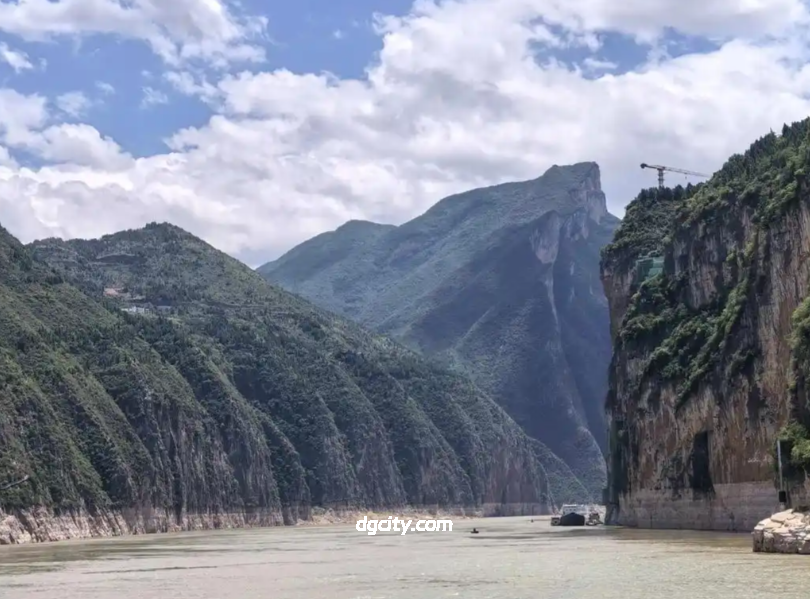
Today, the poetry corridors and steles in the scenic area engrave these eternal masterpieces. Walking among them, you can almost hear the literati chanting across thousands of years and feel the integration of poetry and mountains and rivers. After the impoundment of the Three Gorges Project, the water level rose to 175 meters, and Baidi City, surrounded by water on all sides, became a green island in the “high gorge and flat lake”. Looking far from the height, the river is like a mirror, and the distant mountains are like daisy. It has both the tranquility of “a lonely sail fades away into the blue sky” and the grandeur of “a high gorge emerges as a flat lake”, making the scenery more unique.
Adjacent to Baidi City, Qutang Gorge is 8 kilometers long, the shortest, narrowest and most dangerous section of the Three Gorges, but it enjoys the reputation of “Kuimen is the most magnificent under heaven”. Kuimen Gate at the western mouth of Qutang Gorge, also known as Qutang Pass, controls Bashu in the west and Jingchu in the east. It has been a strategically important place since ancient times. On both sides of the strait, Chijia Mountain and Baiyan Mountain stand opposite each other, with cliffs standing steeply like cut by axes. The narrowest part of the river is only 150 meters, and the river rushes past with great momentum. This is the classic landscape on the back of the 10-yuan RMB. Kuimen Observation Deck is the best place to watch this wonder. There is a stone tablet inscribed with “Kuimen” on the platform. Standing here, you can have a panoramic view of the grandeur of “the sky opens a line, the gorge opens a gate, and the valley locks a river”. Every random shot is a blockbuster with a sense of atmosphere.
The beauty of Qutang Gorge lies not only in its grandeur, but also in its profound historical heritage. On Chijia Mountain on the north bank, three major sites – Laoguanmiao Cultural Site, Daxi Cultural Site and Wushan Ape Man Site – stand quietly, witnessing 2 million years of human history in China. Laoguanmiao Signal Station, Chijia Building, Ancient Artillery Fort, Ancient Plank Road, Fengxiang Gorge Hanging Coffins and other scenic spots are scattered. Among them, Fengxiang Gorge Hanging Coffins is an eternal mystery. How the ancient people hung the wooden coffins on the cliffs is still thought-provoking. On Baiyan Mountain on the south bank, Mengliang Stairway Ancient Plank Road Relics, Cliff Carvings, Rhinoceros Watching the Moon Peak, Ape Man Peak and other landscapes complement each other. Nearly a thousand characters on the cliff carvings cover a variety of calligraphy styles, dating back to the Song Dynasty, which are precious cultural treasures.
Taking the scenic ferry to tour Qutang Gorge is the best way to immerse yourself in its danger and grandeur. The cruise ship shuttles between the canyons, with cliffs on both sides coming head-on, the river gurgling, and apes crying. You can almost experience the artistic conception of Li Bai’s “Apes cry endlessly on both sides of the strait, and a light boat passes through ten thousand mountains”. To facilitate tourists’ travel, here is sorted out practical travel information: the scenic area is open from 8:30 to 19:00, and the last entry time is 17:30. The adult ticket is 100 yuan, and real-name online ticket purchase is implemented. You can enter the Park quickly with your ID card or QR code. The ticket includes the cost of the internal ferry of the scenic area. In terms of transportation, you can take the high-speed rail to Fengjie Station, then transfer to a bus or taxi to arrive; self-driving can directly reach via Hurong Expressway, and there are sufficient parking spaces around the scenic area.
It is recommended to take a one-day tour: visit Baidi City in the morning to explore the Three Kingdoms relics and read the eternal poems; take the ferry to tour Qutang Gorge in the afternoon, check in at Kuimen, watch the hanging coffins and cliff carvings. In the evening, you can taste local specialties such as Fengjie navel orange steamed river fish and Wushan preserved hoof stewed sweet potato vermicelli around the scenic area, and feel the fireworks of the poetry city. Baidi City & Qutang Gorge has both the grandeur of mountains and rivers, the profoundness of history, and the grace and agility of poetry. Here, you can visit the Three Kingdoms relics, read the eternal famous sentences, stare at the magnificent posture of Kuimen, and feel the endless flow of the Yangtze River. Whether you are a history lover, a poetry lover or a Natural Scenery lover, you can find your own poetry and touch here, and understand the unique charm of the starting point of the Three Gorges.




暂无评论内容