




In the hinterland of western Chongqing, where the Fujiang River and Qiongjiang River embrace gently, lies Anju Ancient Town, a millennium-old town that carries profound cultural heritage. Founded in the 8th year of Kaihuang in the Sui Dynasty (588 AD), Anju served as a county seat three times. Despite the vicissitudes of time, it still retains the purest Bayu customs and traditions. As a national AAAA-level scenic spot and a famous historical and cultural town in China, it is an ideal place to escape the hustle and bustle of the city and find the nostalgia deep in the heart.
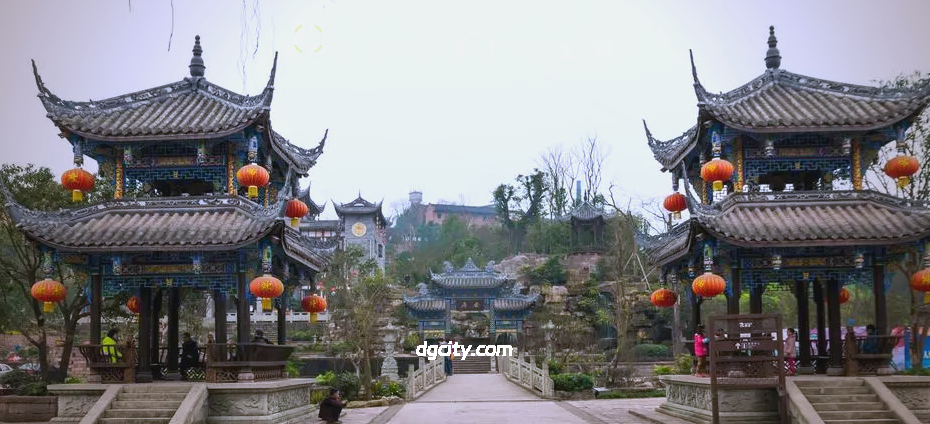
Unlike overly commercialized Ancient Towns, Anju’s beauty lies in the texture of its bluestone roads, the eaves of its Ming and Qing dynasties buildings, and the twilight of the river breeze and fishing fires, waiting for every visitor to savor carefully. The soul of Anju Ancient Town lies in its well-preserved ancient architectural complex and profound cultural heritage. Covering a planned area of 8 square kilometers, the core protection area is dotted with 197 municipal and district-level cultural relics and historic sites. The legend of “Nine Palaces and Eighteen Temples” takes root here, forming a three-dimensional picture of Ming and Qing architecture.
Among them, the Huguang Guild Hall, the best-preserved ancient architectural complex in Southwest China, is particularly striking. On the carved beams and painted pillars, the reliefs of “Journey to the West” and “The Romance of the West Chamber” are vivid and lifelike. The gilded details shine brightly in the sun. Putting on a Hanfu and standing under the ceremonial gate, you can instantly feel the ancient charm of traveling through a thousand years. As the only well-preserved Ming Dynasty county government in Chongqing, it restores the scene of ancient officials working. The majestic main hall and elegant inner hall seem to still echo the shouts of yamen servants and the chatting of common people, allowing people to intuitively feel the charm of ancient county governance Culture.
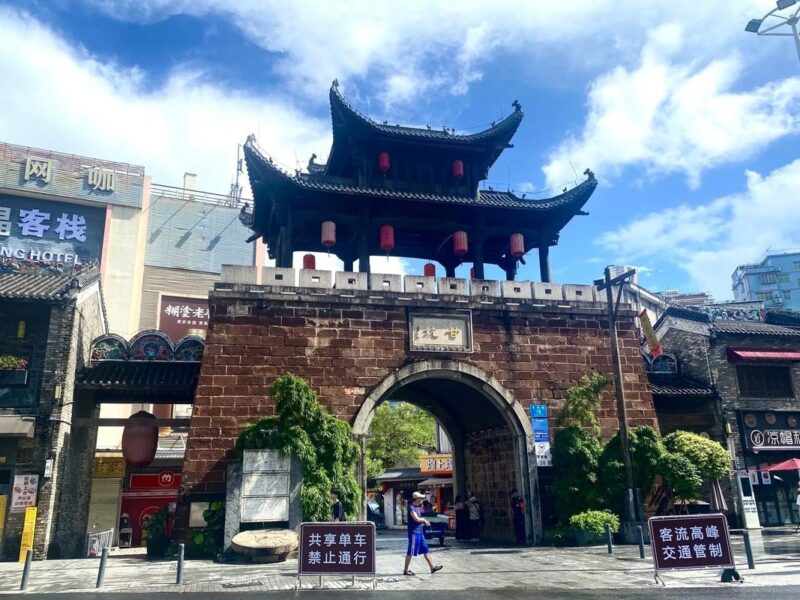
Climbing to the top of Xinghui Gate, the highest gate of the Ancient Town, you can have a bird’s-eye view of Anju’s landscape pattern. Due to the town’s geographical layout of being higher in the south and lower in the north, this gate is the tallest among the nine Ancient City gates. Legend has it that on the night of the Mid-Autumn Festival, watching the moon here, you can see the wonderful scene of “the jade rabbit leaping into your arms”. Standing on the city tower, the Fujiang River winds around the ancient town like a green ribbon, the distant Bolun Temple is hidden among the green mountains, and the nearby Ming and Qing dwellings are row upon row, with blue tiles overlapping and stilted buildings built along the mountains, showing the exquisiteness and agility of Bayu architecture.
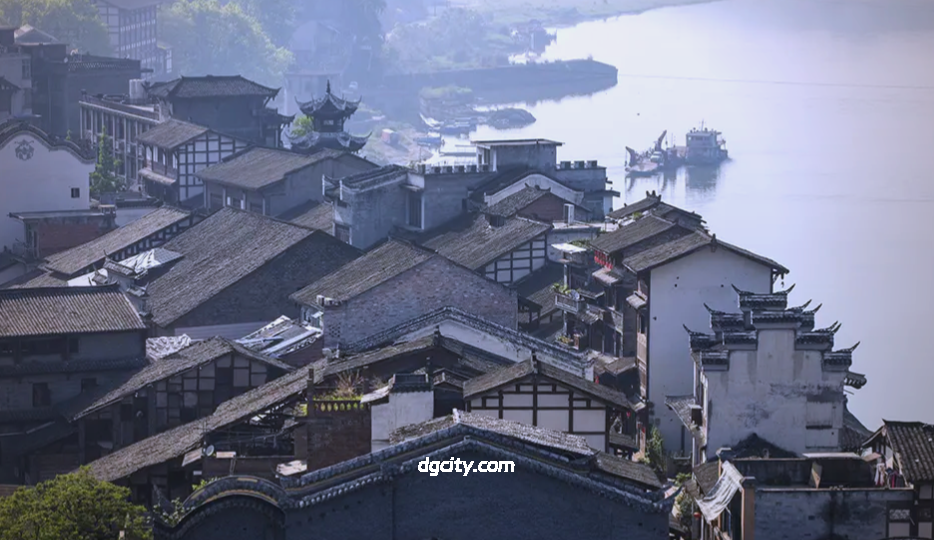
In the evening, the setting sun coats the ancient town with a warm golden glow, the figures of fishing boats returning to the harbor dot the river surface, and the river breeze carries the fragrance of plants and trees, where the fireworks and poetry blend perfectly. After wandering around the ancient streets, you may wish to immerse yourself in Anju’s intangible cultural heritage and characteristic food. At Hedai Ke Bookstore, listen to a session of the municipal intangible cultural heritage “Jin Qian Ban” (a traditional folk art form with dialect rhymes), which is full of humor and rhythm, making people laugh involuntarily. If you happen to be there during a festival, performances such as Tongliang Colored Lantern Dance and Dragon Lantern Weaving will be staged in turn, with gongs and drums roaring, which fully shows the profoundness of Bayu dragon Culture.
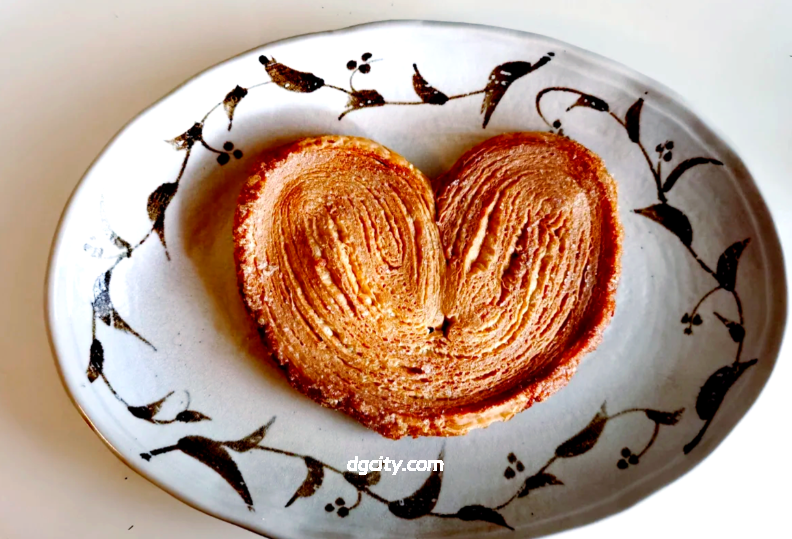
In terms of food, Anju’s flavor carries the ingenuity of a thousand years. The intangible cultural heritage Hanlin Crisp has a history of 200 years, with two flavors of sweet and salt and pepper to choose from. It is crispy and melts in the mouth, carrying the scholarly heritage of the ancient town. The stone-ground tofu from Kejiafang is tender and tasteless, whether fried or boiled, it shows its original flavor. There are also characteristic snacks such as Acacia Glutinous Rice Cakes, Happy Jelly, and Guokui with Jelly, each bite is an authentic Bayu flavor that lingers in the memory. For the main course, Longxiang Crispy Rabbit and Bamboo Tube Braised Pork are recommended, with delicious taste and unique cooking methods that are unforgettable.
The convenience of transportation and accommodation makes this ancient town trip more relaxed. It takes only 1.5 hours to drive from downtown Chongqing to Anju. Navigate to “Anju Ancient Town Tourist Center”, and exiting at Tongliang East is the most convenient. There are shuttle buses operating in a cycle in the scenic area, one every 10 minutes, making it easy to travel between various attractions. For public transportation, you can take the high-speed rail from Chongqing North Railway Station North Square to Tongliang Station, then transfer to a bus to Anju. There are various accommodation options: the high-end Fujiang Mountain Residence is built along the river, where you can experience fire pot barbecue and night performances; the ancient-style Hanlin Mountain Residence has scattered wooden structures, and you can see the ancient streets when pushing the window; the cost-effective Yuanxiangqing Inn has warm and comfortable folk-style decoration and includes breakfast, meeting the needs of different tourists.
Anju’s beauty lies not only in the profoundness of its millennium-old Culture but also in the warmth of its urban life. There is no crowding here, only the tranquility of bluestone roads, the tenderness of river breeze, the aroma of food and the charm of intangible cultural heritage. Whether you check in the core attractions in one day or immerse yourself in depth for two days, you can find your own slow time in this ancient town. Come to Anju Ancient Town, wander around the ancient streets, touch the history, taste the fireworks, and embark on a Bayu date spanning a thousand years.




暂无评论内容