




Fuling Zhacai, a iconic specialty of Fuling District in Chongqing, is known as one of the “Three Great Famous Pickles in the World” along with French sour cucumbers and German sweet and sour cabbage. Its traditional production techniques have been included in the second batch of national intangible cultural heritage list, carrying a century of craftsmanship and regional heritage. This guide will fully disassemble the production techniques of Fuling Zhacai from three dimensions: raw material selection, process steps, and precautions, allowing you to deeply understand this century-old intangible cultural heritage craft and easily master the method of making authentic Fuling Zhacai.
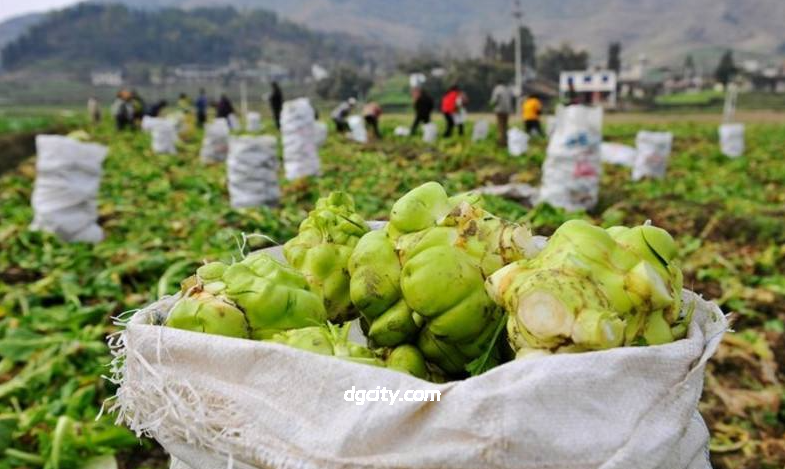
The soul of Fuling Zhacai starts with the unique raw materials and natural environment. Located at the confluence of the Yangtze River and the Wujiang River, Fuling has a subtropical humid monsoon climate that provides sufficient heat and precipitation. The purple soil formed by the weathering of rocks in the Middle Jurassic Period is rich in trace elements such as phosphorus and potassium, providing an excellent condition for the growth of stem mustard (commonly known as “green vegetable head”). The green vegetable heads used for making Zhacai must be high-quality stem mustard with fresh and plump appearance, no diseases and insect pests, and thick flesh, with green skin, white interior, and firm texture without hollowness. Only such raw materials can ensure the crisp and tender taste of the finished product. In addition to green vegetable heads, the auxiliary raw materials also have strict requirements: table salt is Zigong well salt, which is fine-grained and high-purity; peppers should be bright in color and mellow in spiciness, ground into powder for later use; spices are mixed with star anise, galangal, licorice, etc. in a specific proportion to inject a unique aroma into Zhacai.
The core of Fuling Zhacai production is the “three cleanings, three washes, three saltings and three pressings” process. Each step is full of craftsmanship and cannot be perfunctory. The first step is raw material processing. First, remove the old roots, old leaves and impurities from the green vegetable heads, and wash them three times with clean water to remove surface sediment, residual impurities and fine fluff respectively, ensuring that the raw materials are clean. After cleaning, cut the green vegetable heads into uniform pieces or strips, put them in a drying shed to air-dry naturally, and dehydrate them with the river wind of the Yangtze River until the surface of the green vegetable heads shrinks and feels soft without hard core. This step can not only remove excess water, but also make the green vegetable heads more tough.
Next is the key link of “three saltings and three pressings”, which determines the taste and flavor of Zhacai. For the first salting, add 45 kilograms of table salt per 100 kilograms of green vegetable heads, spread the salt in layers and compact it, take it out after salting for 72 hours, and put it into a water control tank to drain excess salt water. This step is called “first salting and first pressing”, which mainly aims to squeeze out the bitter water in the green vegetable heads and restore their natural toughness. For the second salting, add 5 kilograms of table salt per 100 kilograms of green vegetable heads after the first salting, compact and salt them in layers again for 7 days, and drain the salt water to complete “second salting and second pressing”. This step can accurately control the salt content, promote the natural fermentation of green vegetable heads, and initially form the aroma. For the third salting, wash the green vegetable heads that have been salted twice again, drain the water, add chili powder, Chinese prickly ash, mixed spices and other ingredients, stir well, put them into a jar, compact and seal them, and carry out the third fermentation. This is “third salting and third pressing”, which makes the fresh, fragrant, crisp and tender layers of Zhacai distinct.
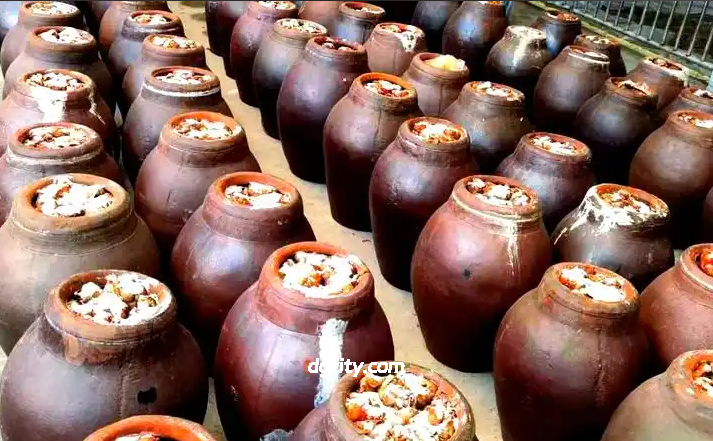
Fermentation and post-ripening are the key steps to sublimate the flavor of Zhacai. After being put into the jar, the Zhacai should be placed in a cool, ventilated and temperature-appropriate environment, sealed and fermented for 2-3 months. During this period, there is no need to open the jar, allowing the aroma of the spices to fully integrate with the original flavor of the green vegetable heads and naturally produce fragrance. During the fermentation process, the Zhacai will gradually show a jade-yellow color, and the taste will become more crisp and refreshing, moderately salty and spicy, with a sweet aftertaste. After fermentation, open the jar, take out the Zhacai, conduct the final screening, remove impurities and unqualified pieces, and then the finished Fuling Zhacai can be obtained.
There are several key precautions in the production process that are indispensable. First, the amount of table salt must be accurate. Too much will make the Zhacai too salty, and too little will easily lead to deterioration, affecting preservation and taste; second, the cleaning link must be thorough to avoid residual sediment or impurities affecting the quality of the finished product; third, the fermentation environment must be dry and ventilated, and the temperature should be controlled at 15-25℃ to avoid mold caused by damp and stuffy conditions; fourth, the jar must be compacted and sealed when filling to prevent air from entering, otherwise the fermentation effect will be affected and the taste of Zhacai will be poor.
Since Qiu Shouan and Deng Bingcheng created Zhacai in the 24th year of Guangxu in the Qing Dynasty, it has now become a characteristic product exported to more than 80 countries and regions. The production techniques of Fuling Zhacai have undergone a century of inheritance and innovation. Today, the combination of traditional ancient craftsmanship and modern automated technology not only retains the essence of intangible cultural heritage techniques, but also improves production efficiency, but the craftsmanship of “three saltings and three pressings” has never changed. Mastering this guide, you can not only make authentic Fuling Zhacai, but also understand the regional Culture and century-old persistence behind this intangible cultural heritage craft.








暂无评论内容