




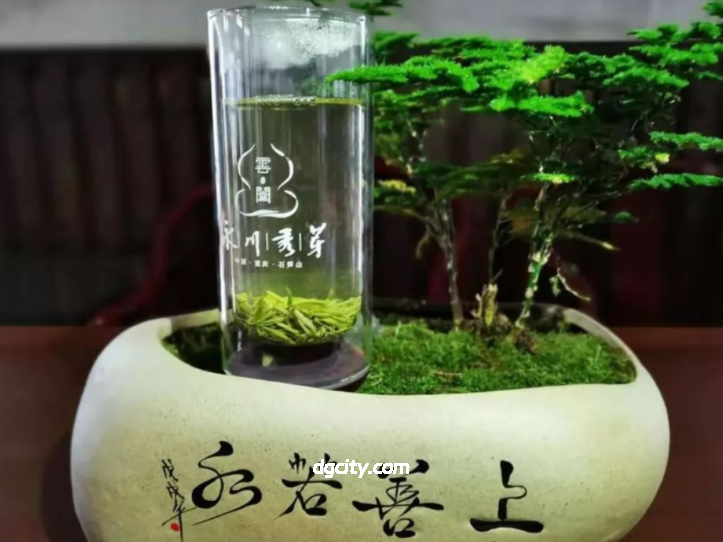
Yongchuan Xiuya Tea is a unique national geographical indication famous tea produced in Yongchuan, Chongqing, and also a municipal-level intangible cultural heritage of Chongqing. As a classic needle-shaped green tea, it boasts core characteristics of “slender shape, emerald green color, clear tea soup and mellow taste”, becoming a representative treasure of Bashu tea Culture. Its handmade making skills have been inherited and polished for more than half a century, abandoning the rough process of mechanized mass production. The whole process relies on craftsmen’s hands and experience control, and each procedure condenses the wisdom of traditional tea making. It not only retains the natural freshness of fresh leaves, but also shapes the unique straight needle shape and mellow taste of Xiuya Tea, making it one of the few famous green tea skills in China that completely retain the pure handmade refining process.
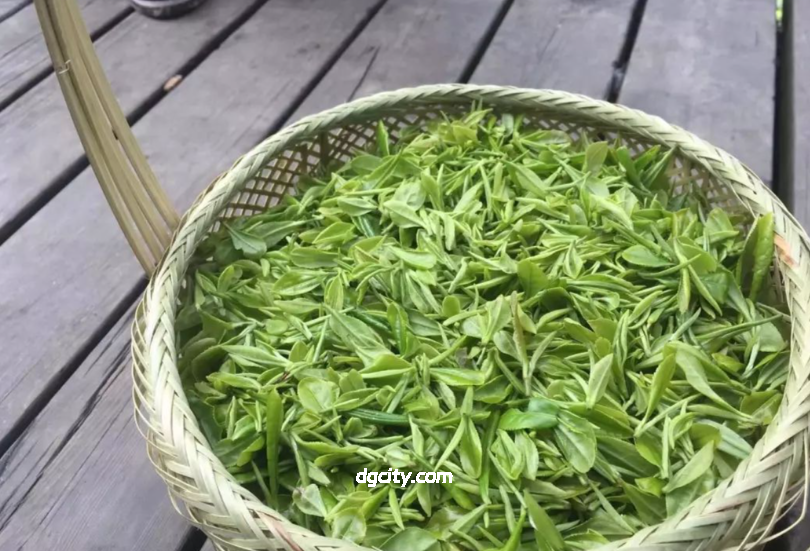
To make authentic Yongchuan Xiuya Tea, the first step is to adhere to the strict bottom line of fresh leaf picking, which is the foundation of high-quality tea. Yongchuan Xiuya only selects fresh leaves from alpine tea gardens in Yongchuan in early spring. The picking time is strictly limited to after the morning dew dries up until 10 a.m., when the tea buds and leaves are rich in nutrients, with the optimal ratio of amino acids and tea polyphenols, and the freshness and integrity are far better than other periods. The picking standard is one bud with one initial unfolding leaf, and the integrity of buds and leaves must reach more than 95%. Purple leaves, diseased and insect-infested leaves, and broken leaves are strictly prohibited. Each 500 grams of premium Yongchuan Xiuya Tea requires nearly 35,000 high-quality buds, which can be called a “treasure among teas”. Fresh leaves after picking must be sent to the processing workshop within 2 hours to avoid accumulation and heating, preserving the original flavor of fresh leaves to the greatest extent.
The first core procedure is withering, a key step to stimulate tea aroma and reduce bitterness. Craftsmen spread fresh buds and leaves evenly and thinly on clean bamboo dustpans, with a thickness strictly controlled within 2 cm. The leaves are placed in a ventilated and cool place with a temperature of 18-22℃ and humidity of about 70%, standing for 6-8 hours. During this period, they are gently turned manually every 2 hours to prevent fresh leaves from heating and deteriorating. In the withering process, fresh leaves lose water moderately, with a water loss rate controlled at 12%-15%. Tea polyphenols are oxidized slowly, and amino acid content increases significantly. This process not only removes the grassy smell of fresh leaves, but also makes the subsequent taste of tea more fresh, sweet and moist, laying a solid foundation for subsequent processes.
The second procedure is manual fixation, the core step to lock in tea nutrition, shape and fix aroma. traditional cast iron pots are used, with the pot temperature accurately controlled at 160-180℃, and only 250 grams of leaves are added each time to ensure even heating of each bud and leaf. Relying on years of experience, craftsmen use four techniques: shaking, stuffy frying, throwing and turning, stir-frying manually for 4-5 minutes. This quickly inactivates the oxidase activity in fresh leaves, prevents further oxidation of tea polyphenols, and retains the emerald green color of fresh leaves. The degree of fixation is judged entirely by hand: the leaves become soft and lose luster, clump together when held and scatter when released, with a weight loss rate of about 30%. Under-fixation will cause subsequent red discoloration, while over-fixation will produce burnt smell, so the control of heat and techniques depends entirely on the craftsman’s years of experience.
The third procedure is manual rolling, aiming to shape tight tea strips and extrude tea juice to stimulate aroma. Rolling is carried out on bamboo dustpans throughout the process, adopting a three-stage force control of “light-heavy-light”: light rolling for the first 5 minutes to initially shape tea strips and slightly exude tea juice; heavy rolling for 10 minutes in the middle stage to promote tight rolling of tea strips, making tea juice adhere to the surface of buds and leaves, enhancing the subsequent brewing taste; light rolling again for the last 5 minutes to straighten tea strips and avoid broken leaves. The whole rolling process is gentle, and craftsmen judge the state through fingertip touch and the “rustling” sound of tea friction, ensuring that tea strips are tight but not broken, uniform and beautiful, which is also the key to the slender strips of Yongchuan Xiuya Tea.
The fourth procedure is secondary drying, a unique craft of Yongchuan Xiuya Tea that distinguishes it from other green teas, abandoning the disadvantage of easy burning in traditional secondary stir-frying. Bamboo drying cages are used for low-temperature baking. The rolled tea strips are evenly spread on the drying cage, with a thickness of no more than 3 cm, temperature controlled at 90-100℃, and baked for 15-20 minutes, reducing the moisture content of tea from 60% to 40%. Secondary drying can quickly shape the tea to avoid adhesion of tea strips, retain the fresh green color of tea, stimulate fresh and tender aroma, and avoid burnt smell caused by stir-frying, making the tea taste purer. This craft is also the core innovation of Yongchuan Xiuya’s handmade skills.
The fifth procedure is manual strip shaping, the soul process forming the iconic needle shape of Yongchuan Xiuya Tea, which tests the craftsman’s patience and techniques most. The pot temperature is reduced to 60-70℃, craftsmen put the secondary dried tea into the pot, and alternately use three core techniques: straightening, wrapping and rubbing, taking 2-3 hours in total. First, straighten the tea strips with both hands, then wrap the tea clump with palms and rub gently to shape gradually, and finally tighten the tea strips with fingertips. The pot temperature and techniques are adjusted continuously during the process, until the tea strips are straight and slender, with silver tips exposed, and the moisture content drops to about 12%. The forming of each tea strip cannot be replaced by mechanized tools, which is the core reason why handmade Xiuya Tea is far more valuable than machine-made tea.
The final procedure is slow baking with slow fire, completing the drying and aroma enhancement of tea. The shaped tea is spread thinly on the drying cage, with a thickness of no more than 2 cm, and slowly baked at 50-60℃ for 2-3 hours. During this period, it is gently turned manually every 30 minutes to ensure even heating, and the moisture content is finally reduced to below 6%. Low-temperature slow baking can fully stimulate the high aroma of tea, fully expose white tips, remove residual astringency of tea, and make the taste more fresh, mellow and sweet. After drying, the tea needs to be placed in a cool and ventilated place for 24 hours to settle the aroma and make the taste more mild. Then, after manual selection to remove broken and residual leaves, the whole production process of authentic Yongchuan Xiuya Tea is completed.
The handmade making skills of Yongchuan Xiuya Tea are not only a tea making process, but also a carrier of Bashu tea Culture inheritance. From fresh leaves to finished products, nearly 6 hours of manual carving throughout the whole process has no shortcuts. Each procedure is refined, which not only keeps the root of intangible cultural heritage skills, but also achieves the excellent quality of Yongchuan Xiuya Tea. Nowadays, this skill is inherited by generations of tea craftsmen, making this wisp of tea fragrance from the deep mountains of Yongchuan cross regions and become a classic business card of traditional handmade green tea in China.







暂无评论内容