




Baisha Town in Jiangjin District, Chongqing, located by the Yangtze River and Luxi Stream, has long been a key liquor-making town in Southwest China. The Jiangjin Luxi Baijiu Brewing Technique bred here is a treasure of ancient Bayu handmade liquor-making craft with a history of nearly 500 years. It was officially listed in the Chongqing Intangible cultural heritage List in 2011, becoming the core representative of Chongqing Xiaoqu (small yeast) Baijiu brewing technique and an irreplaceable living inheritance in Sichuan-Chongqing liquor Culture. Adhering to the core principles of pure handcraft, pure grains and pure natural brewing, this technique has been polished by generations of craftsmen, forming a rigorous and interlocking brewing system. Every drop of fine liquor embodies the regional aura and craftsmen’s ingenuity, hiding the smoke and aroma of the Bayu land.
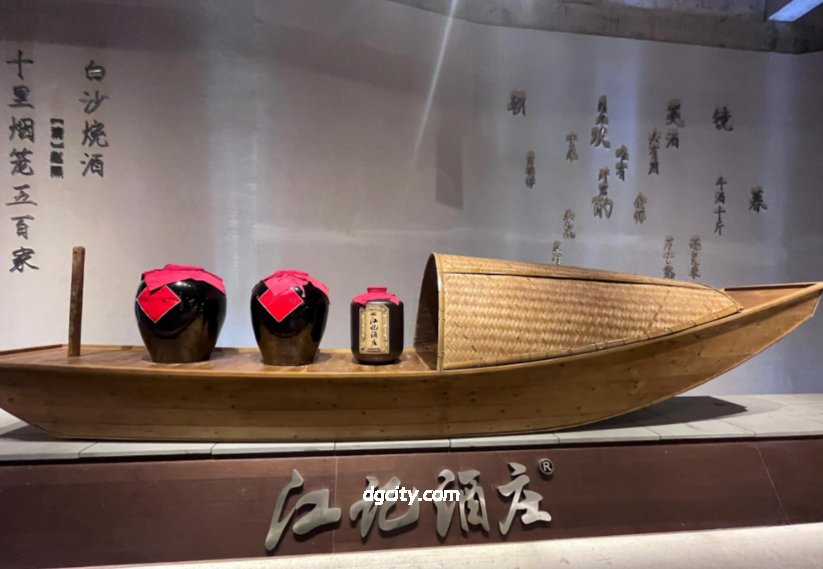
To fully understand Luxi Baijiu Brewing Technique, we must first grasp its unique regional foundation, which is the core basis for the formation of the craft. Baisha Town enjoys a mild and humid climate, with an annual average temperature of 17.9℃, a long frost-free period and abundant rainfall, providing an excellent natural environment for liquor fermentation. Luxi Stream runs all year round, with clear, sweet and soft water that contains extremely low minerals and no impurities or peculiar smells, making it the golden water source for liquor-making, which can maximize the original flavor of grains. The local red waxy sorghum is plump, with a starch content of over 60%, moderate proportion of protein and tannin, and low fat content. It is the exclusive raw material for brewing high-quality Xiaoqu Baijiu. Mixed with local high-quality rice husks as auxiliary materials, it ensures the air permeability of fermentation without damaging the purity of the liquor body, which is the inherent advantage of Luxi Baijiu’s clear, refreshing and sweet taste.
Luxi Baijiu Brewing Technique strictly follows five core processes: steaming, spreading, yeast adding, fermentation and distillation, which are subdivided into more than 30 manual procedures. The whole process abides by the ten-character motto summarized by craftsmen: strict, diligent, meticulous, accurate, appropriate, even, clean, fixed, genuine and dedicated. Every procedure cannot be sloppy, and it is completely controlled by craftsmen’s experience, which cannot be replaced by machines. First is the raw material pretreatment process: select high-quality waxy sorghum without mildew and impurities, soak it in a bluestone soaking barrel for more than 10 hours. The thermal insulation of stone allows sorghum to absorb water fully, reaching a state of full grains without raw cores, laying a foundation for subsequent steaming.
Then comes the grain steaming process: use a cypress wooden steamer to steam the soaked sorghum through three steps: initial steaming, water stuffiness and re-steaming, until the sorghum is fully cooked, soft and evenly cracked. This ensures full starch conversion and retains the original fragrance of grains. After steaming, the key step of spreading and yeast adding begins, which is the core essence of the technique. Craftsmen spread the cooked grains evenly on a bamboo cooling bed with bamboo tools, stir and cool them repeatedly with wooden shovels and rakes, and accurately control the temperature. When the grain temperature drops to a suitable range, evenly sprinkle the exclusive purebred rhizopus Xiaoqu (small yeast). This light brown yeast has a unique fragrance, which can efficiently catalyze grain saccharification and fermentation, and is the key to Luxi Baijiu’s unique flavor.
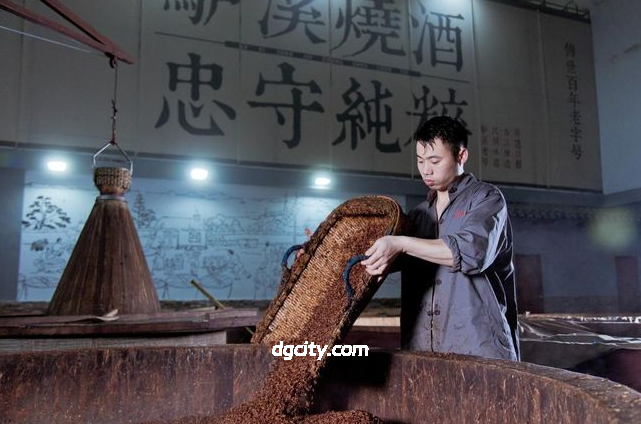
After mixing the yeast evenly, the grain lees are put into a bluestone saccharification box for Culture saccharification. The temperature and humidity are strictly controlled during the process to ensure even mycelium growth and sweet sugar conversion, accumulating energy for subsequent fermentation. Then enters the fermentation stage, the core link determining liquor quality. Adjust the proportion of lees, moisture and temperature according to seasonal changes, put the saccharified grain lees into fir fermentation barrels for sealed fermentation, following the ancient rule of “brewing with wood, no iron contact” to avoid metal tools damaging the liquor flavor.
The fermentation cycle is flexibly adjusted according to the temperature. Craftsmen accurately judge the fermentation degree through traditional methods such as touching, smelling and observing, waiting for full conversion of starch and sugar into alcohol and rich flavor substances. After fermentation, distillation is carried out with a cypress wooden steamer. Craftsmen pick liquor by observing liquor bubbles, selecting only high-quality middle-section raw liquor and discarding impurities in the head and tail sections to ensure pure liquor quality. The raw liquor is then sealed in pottery jars and stored in a constant temperature and humidity warehouse for aging. During long-term aging, the liquor becomes softer and mellower, with impurities volatilized and aroma prolonged.
Finally, senior craftsmen blend the aged liquor in traditional proportions without adding any essences or spices, retaining the original flavor of grains and yeast. Only after passing multiple inspections can the whole brewing process be completed. This technique carries hundreds of years of liquor-making history in Jiangjin Baisha, from hundreds of workshops along Luxi Stream in the Ming and Qing Dynasties to the adherence of inheritors today. It has experienced ups and downs but never been interrupted, always guarding the original flavor of ancient Bayu Baijiu.
Nowadays, Luxi Baijiu Brewing Technique is moderately innovated on the basis of adhering to ancient methods, retaining the core intangible cultural heritage craft while optimizing production standards, making this century-old technique known to more people. It is not only an important part of Chongqing’s intangible cultural heritage, but also a vivid sample of China’s traditional Xiaoqu Baijiu brewing technique, witnessing the inheritance and development of Sichuan-Chongqing liquor Culture. Every brewing is a tribute to ancient methods, and every drop of fine liquor is the precipitation of time and ingenuity, worthy of careful tasting and permanent inheritance.






暂无评论内容