




Liangping Laizi Drum Music, a distinctive folk percussion art rooted in Liangping District, northeast Chongqing, stands out as one of the most representative traditional music genres in the Bayu area. Inscribed on the first national list of intangible cultural heritage of China in May 2006, this unique drum music has been passed down for hundreds of years, blending rugged rural charm and delicate rhythmic patterns, and has become a vivid cultural symbol carrying the local people’s memories and customs. Unlike ordinary Chinese drum music, it boasts a unique performance style and rich tune system, making it a precious treasure of Chinese folk percussion art.
The history of Liangping Laizi Drum Music can be traced back to the Ming and Qing dynasties, as recorded in the *Bamboo Branch Poems* written by Lan Yiqing, a literary figure in Liangping during the Qing Dynasty. Though its exact origin is hard to verify, historical records prove it had been widely popular among local people for centuries. Originating from the folk and growing with daily life, it was initially a recreational activity for local farmers after work and during festivals. Gradually, it integrated into various folk scenarios such as weddings, funerals, ancestor worship, temple fairs and opening ceremonies, forming a fixed performance system and artistic style. Together with Liangshan Lantern Opera, Liangping New Year Pictures and Liangping Bamboo Curtains, it is known as one of the four great folk cultural treasures of Liangping, enriching the local cultural heritage deeply.
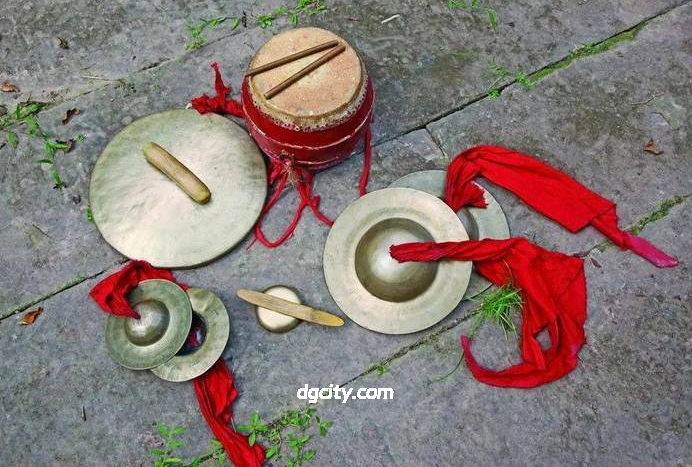
The instrument configuration and band formation of Liangping Laizi Drum Music are highly distinctive. A complete set of instruments includes two types of drums, horse gong, cymbal, big gong, hook gong and small cymbal, totaling six percussion instruments. A standard band consists of five performers: four play while sitting, and only the horse gong player stands to perform, also taking charge of the hook gong at the same time. This special performance formation is a core feature that distinguishes it from other drum music genres in China. During performance, each instrument plays a unique role: the two drums lead the core rhythm, the big gong creates a deep and steady tone, the horse gong adds a crisp and lively melody, cymbals and small cymbals set off the atmosphere, and the hook gong embellishes the rhythm. The intertwined sounds are loud, dynamic and rhythmically varied, full of wild vitality from the mountains and delicate folk charm, with strong artistic appeal that touches every listener.
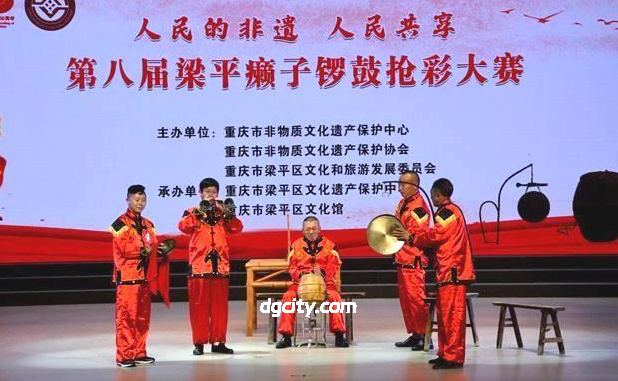
The tune system of Liangping Laizi Drum Music centers on the classic “Eighteen Laizi”, which is the origin of its name “Laizi”. The entire “Eighteen Laizi” is composed of 18 independent segments, divided into six groups with three segments each. Each group follows a fixed order: starting with horse gong, then cymbal, and finally big gong. Performers play all 18 segments in one go, with coherent rhythms and clear layers. In addition to the core “Eighteen Laizi”, there are classic sub-tunes such as Old Laizi, Floral Laizi, Mandarin Duck Laizi and Sly Laizi. Over time, more than 100 additional tunes have been developed, including Golden Silver Lantern, Red Embroidered Shoe, Half Moon, Flower Butterfly and Dragon Wagging Tail. These diverse tunes adapt to different folk occasions, creating either a festive and lively atmosphere or a solemn and dignified vibe, combining practicality and artistry perfectly.
The performance of Liangping Laizi Drum Music requires a perfect integration of heart, mouth and hand. Unlike modern music with written scores, it has been passed down orally from masters to apprentices for generations. Performers must memorize every rhythm and melody by heart, coordinate closely with teammates, and master precise playing skills to present a perfect show. It is deeply integrated into the daily life of Liangping people: it accompanies traditional festivals like the Spring Festival and Dragon Boat Festival, folk celebrations, weddings, birthdays, opening ceremonies and ancestor worship activities. It is not only a form of art, but also an important carrier of folk communication and cultural inheritance, deeply loved by local people for hundreds of years.
In recent decades, Liangping Laizi Drum Music once faced a heritage crisis: the elder artists are getting old, few young people are willing to learn this traditional skill, and the number of performers has declined sharply. To protect this precious intangible cultural heritage, Liangping District has launched a series of protection measures: establishing a special heritage protection center, sorting out and recording traditional tunes, cultivating young inheritors, and carrying out activities in schools, communities and scenic spots. Today, Liu Guansheng, a national-level representative inheritor, and other elder artists stick to teaching skills personally, and more and more young people begin to learn and inherit this art. It has stepped out of Liangping, staged on various cultural exhibition stages at home and abroad, becoming an important window to show Bayu Culture and promote Chinese folk art to the world.
Liangping Laizi Drum Music is a living fossil of Bayu folk Culture, a crystallization of the wisdom of working people, and a century-old cultural inheritance. With its sonorous and powerful rhythm, it tells the changes of Liangping and carries the warmth of folk life. Under the protection of intangible cultural heritage inheritance, this ancient folk art will continue to be passed down and shine in the new era, showing the unique charm of Chinese traditional folk percussion music to the world.





暂无评论内容