




Rongchang folding fan, one of China’s top four famous folding fans, is a national intangible cultural heritage and one of the “Three Treasures of Rongchang” together with Rongchang pottery and grass linen. Originating in the Northern Song Dynasty and flourishing in the Ming and Qing Dynasties, it was once an imperial tribute and sold well overseas. With thousands of years of inheritance, it still sticks to strict pure handmade standards, featuring light ribs, smooth opening and closing, elegant surface and high durability, making it a classic oriental elegant craft. Its making process is elaborate, divided into 16 sections and 145 detailed procedures, every step is indispensable, and each finished fan embodies craftsmen’s ingenuity and time accumulation, serving as a key carrier of Sichuan and Chongqing traditional handicraft Culture.
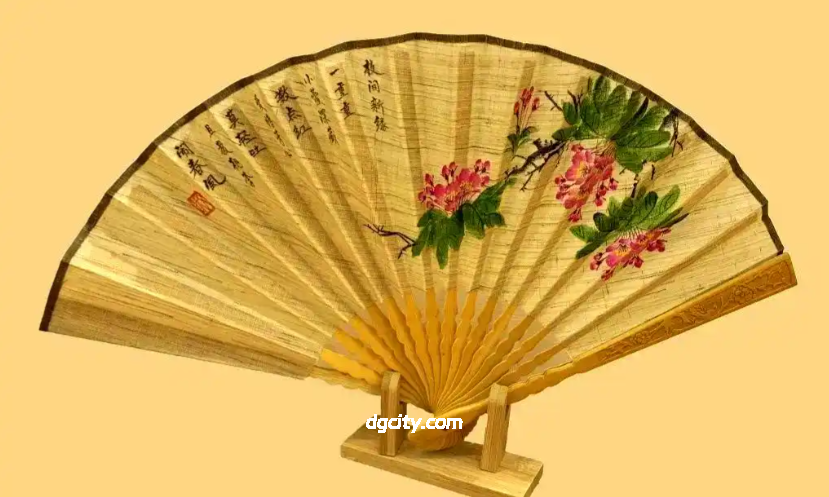
To make a qualified Rongchang folding fan, strict material selection is the top priority, as raw material quality directly determines the fan’s durability and artistic value. Fan ribs, the core frame, are mainly made of three-year-old moso bamboo and brown bamboo grown in sunny areas of Rongchang; high-end fans use mottled bamboo, ebony or sandalwood, which feature dense texture, high toughness and resistance to deformation. Polished brown bamboo ribs are dark red with delicate veins, a treasure of Rongchang fans. Fan surfaces are made of rice paper, mulberry paper, silk and Rongchang grass linen, breathable and suitable for painting. traditional black paper fans are coated with special persimmon paint and tung oil, rain and sun resistant, known as “a fan for sunny days and an umbrella for rainy days”. All adhesives and dyes are natural, free of chemical additives, following the original eco-friendly craft.
The whole craft is divided into three core parts: fan rib making, fan surface making and assembly shaping, all completed by hand, testing craftsmen’s skills and patience. Fan rib making is the most critical part: first, pretreat bamboo by peeling, slicing, boiling for 4 hours to prevent insects and corrosion, then air-drying for 6 months to remove moisture and sugar; second, shape ribs manually with special knives, controlling thickness error within 1mm to ensure smooth opening and closing; third, polish ribs repeatedly until smooth as jade, and add carving or inlay for high-end products; finally, drill precise holes for neat assembly.
Fan surface making is equally delicate: first, cut the surface to match rib size and brush natural alum water to stiffen it and prevent ink bleeding; second, mount the surface to ribs evenly with special glue, ensuring no bubbles or wrinkles in constant temperature and humidity environment; third, decorate with painting and calligraphy. Many famous artists such as Guo Moruo and Zhang Daqian have created art on Rongchang fans, enhancing their cultural and collection value, while ordinary styles are painted with traditional patterns for public aesthetics.
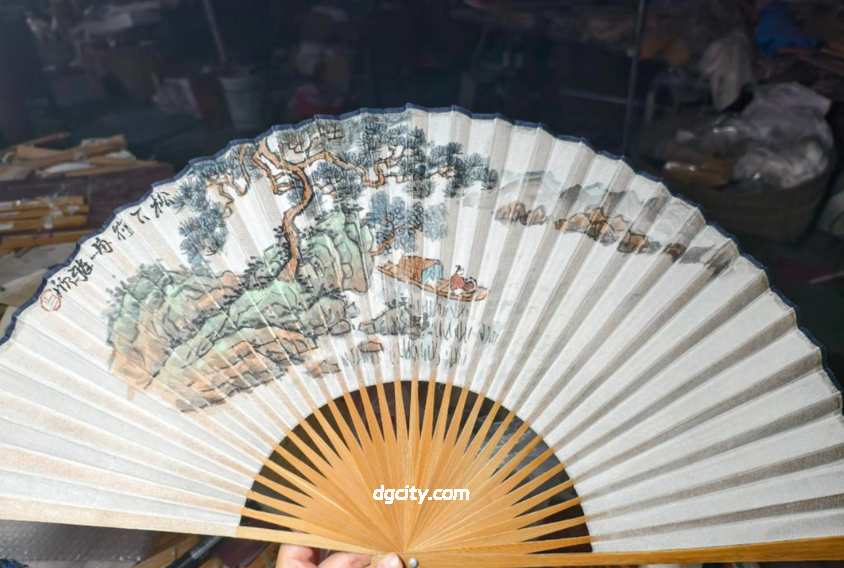
Assembly and shaping is the final key step: wet the mounted fan surface, fold it along rib gaps, arrange each rib neatly to keep the surface flat and symmetrical, bind the fan tail tightly and leave it to dry completely for days. Then trim edges, install fan nails and match silk tassels for elegance. Finally, conduct quality inspection by opening and closing dozens of times to ensure smooth use and no defects. A high-quality Rongchang fan takes about two months to finish, all handmade without mass production, retaining the unique warmth of traditional handicraft.
Rongchang folding fan making is not only a handicraft, but also a heritage of thousands of years of Culture and craftsmanship. It integrates bamboo art, mounting, painting, calligraphy and carving, combining practicality, ornamentation and collectibility. Nowadays, craftsmen innovate on the basis of traditional procedures, improving tools and styles to fit modern aesthetics, making this ancient intangible heritage popular among the public and inheriting oriental traditional charm.






暂无评论内容