




1. Overview: A Precious Intangible cultural heritage of traditional Dwellings
Tujia Diaojiao Building Construction Skills is a national intangible cultural heritage of China, mainly inherited in Tujia-inhabited areas such as southeastern Chongqing, western Hunan and western Hubei. It was officially included in the third batch of national intangible cultural heritage list in 2011, known as a “living fossil” of Chinese traditional residential architecture. Originated from ancient stilted buildings, this skill has evolved for thousands of years, integrating the survival wisdom, folk beliefs and architectural aesthetics of the Tujia ethnic group. It is a purely manual construction technique that builds solid and durable stilted buildings only by tenon-and-mortise structures without any nails, perfectly adapting to the mountainous, humid and wood-rich geographical environment of the Wuling Mountain area.
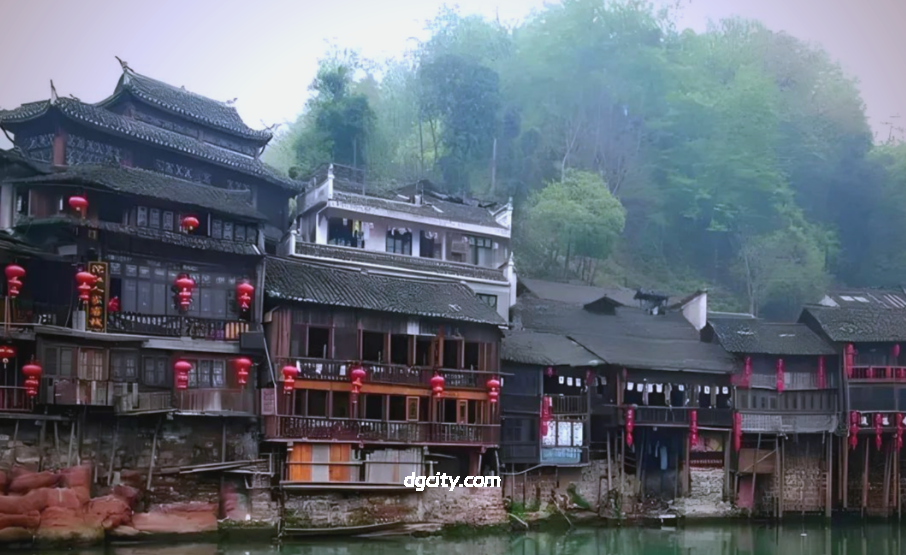
Diaojiao Building is a semi-stilted wooden building, with the core feature of “suspended stilts built against mountains”. It uses wooden pillars of different lengths to support suspended floors, solving the problem of insufficient flat land in mountainous areas. Meanwhile, it achieves practical functions such as ventilation, moisture protection, and layered use. The whole construction system is complete, from site planning to completion sacrifice, every step contains strict craft standards and profound folk implications. Led by experienced “master carpenters” who pass down skills through families, the whole process only uses simple tools like ink boxes, rulers, chisels and axes to complete accurate measurement and component processing.
2. Core Construction Process: Meticulous and traditional craftsmanship
2.1 Site Selection and Material Preparation: Adapt to Nature and Choose Auspicious Materials
The first step of constructing Diaojiao Building is site selection. Tujia people prefer a site backed by mountains, facing valleys and surrounded by gentle hills, which conforms to their folk custom of geomancy and ensures comfortable living. After selecting the site, an auspicious day must be chosen for construction, and a simple sacrifice ceremony is held to pray for smooth progress and family peace.
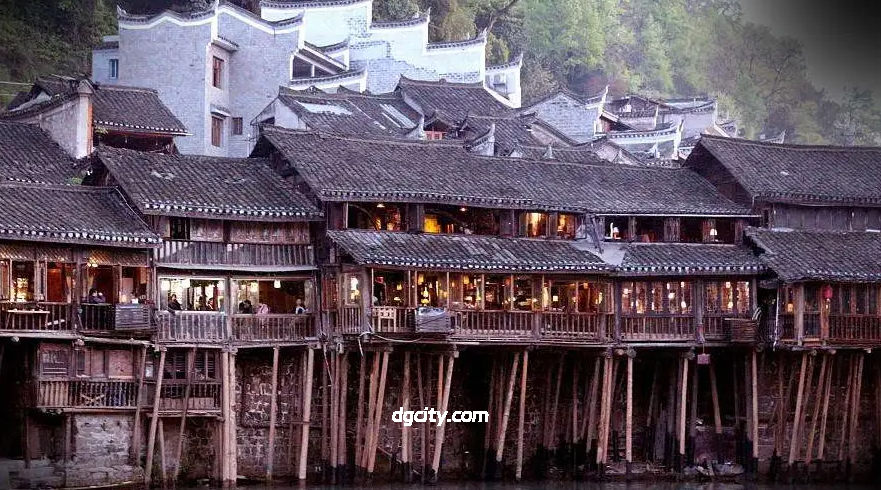
The material preparation stage, locally called “cutting green mountains”, has strict material selection rules. Core beams and pillars are mostly made of toon, cypress and purple wood, which are dense, durable and carry auspicious meanings of “spring” and “offspring prosperity”. Auxiliary components such as square timbers and rafters are made of fir and pine, which are easy to obtain. There are strict rules for cutting wood: sacrifices to mountain gods are required before cutting, and the first tree must fall to the east. After cutting, the wood is air-dried for months to prevent deformation and cracking.
2.2 Component Processing: Tenon-and-Mortise as the Core, Exquisite Carving
Component processing is the core of the construction skill. All components adopt tenon-and-mortise structure, where tenons and mortises are precisely matched to form a stable frame without nails. Master carpenters use ink lines to mark sizes, and process various components including pillars, beams, square timbers, rafters and suspended columns. Exquisite carvings of auspicious patterns such as double phoenixes facing the sun, lions rolling balls and geometric patterns are made on doors, windows and pillars, combining practicality and ornamental value.
After processing, workers assemble pillars and square timbers into complete roof trusses, testing the splicing in advance to ensure accurate fitting during the vertical erection. This step tests the master carpenter’s experience and skills, and is a key part of the whole construction process.
2.3 Erecting the Frame and Beam Erecting: Grand Folk Rituals
Erecting the frame is a vital node, with neighbors coming to help. Everyone works together to erect and fix the pre-assembled roof trusses. Beam erecting is the most grand ceremony: a high-quality beam is selected, painted with auspicious patterns, and the ceremony is held on an auspicious day. Craftsmen recite blessings and throw auspicious cakes, and the host hosts a feast for relatives and friends, marking the completion of the main structure, symbolizing family prosperity.
2.4 Decoration and Final Work
After the main frame is completed, workers carry out final work including installing wooden boards, laying tiles and building corridors. Diaojiao Building usually has two floors: the upper floor is for living, with a main hall, wing rooms and boudoirs; the lower suspended floor is used as livestock pens and firewood rooms. The outer walls are mostly coated with tung oil for corrosion protection, retaining the natural color of wood, and the overall style is simple and elegant, integrating with the natural landscape.
3. Architectural Features and Cultural Value
The core feature of Tujia Diaojiao Building Construction Skills is “harmony between man and nature, adapting to local conditions”. The construction follows the original landform without damaging the natural environment, and uses pure wooden structures that are green and eco-friendly. The tenon-and-mortise craft is highly scientific, with strong seismic resistance, and the buildings can stand firm for hundreds of years. The architectural decoration integrates Tujia folk Culture, carrying unique national beliefs and aesthetic tastes.
This skill is not only a superb architectural craft, but also a living carrier of Tujia Culture, witnessing the migration and development of the Tujia ethnic group. Nowadays, with the popularity of modern architecture, the traditional construction skill is facing inheritance difficulties. Protecting this intangible cultural heritage is not only guarding traditional architectural Culture, but also inheriting the cultural context of the Tujia ethnic group.





暂无评论内容