




Shu Embroidery, one of China’s Four Famous Embroideries alongside Su, Xiang and Yue Embroideries, boasts a thousand-year inheritance history across the Bashu region. Chongqing Shu Embroidery, as a distinctive branch of Shu Embroidery, stands out for its unique Bayu cultural connotation and artistic style, and was listed as an Extended Item of National Intangible cultural heritage in 2008. Unlike the gentle and elegant style of Western Sichuan Shu Embroidery, it embodies the open and lively character of Chongqing locals, integrating the mountain city’s scenery, folk customs and cultural temperament into every stitch, making it a precious treasure of Chongqing’s intangible cultural heritage.
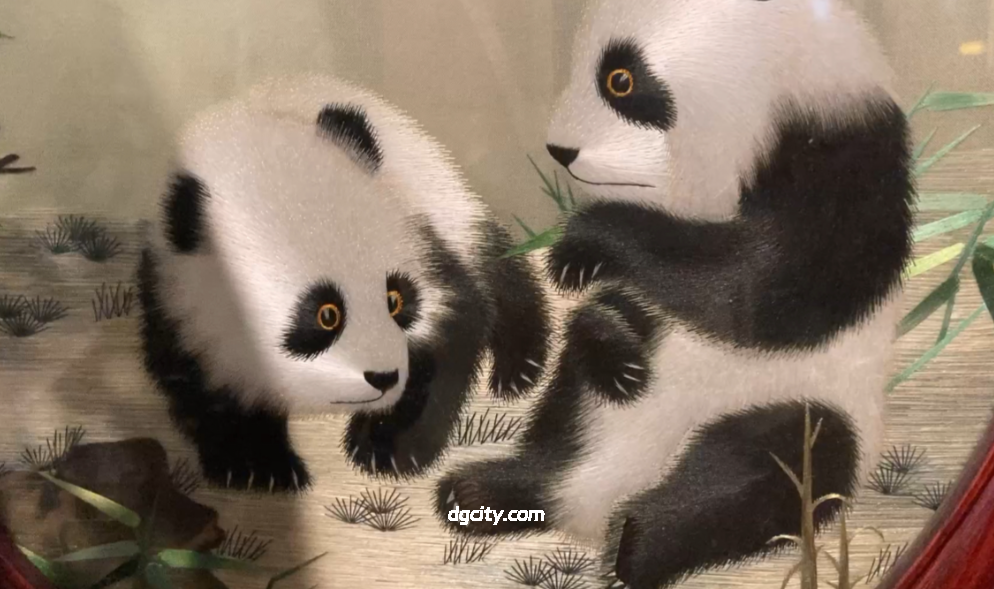
Chongqing Shu embroidery has a long and profound historical origin rooted in the ancient embroidery Culture of Bashu. As early as the Han Dynasty, Shu Embroidery gained wide reputation, and flourished during the Tang and Song dynasties. Relying on its strategic geographical location as a key city in Southwest China, Chongqing became an important inheritance and development center of Shu Embroidery. For thousands of years, it has evolved from a folk handicraft among women to a sophisticated traditional art form, with Yuzhong District as its core inheritance area and radiating to Jiulongpo and other districts in Chongqing. Passed down through master-apprentice and folk systems, it has always adhered to pure handmade craftsmanship, retaining the original ingenuity despite the impact of industrialization.
The craftsmanship and stitching techniques are the core essence of Chongqing Shu Embroidery, featuring a complete and rigorous stitching system with diverse and exquisite methods. It is characterized by “dense stitches without bulk, sparse stitches without exposing the base, smooth and glossy surface, fine short needles, solid interior and loose exterior, and balanced flexibility”. The main embroidery forms include single-sided embroidery, double-sided embroidery and special-shaped multi-color embroidery, with dozens of basic stitches such as laying stitch, straight stitch, diagonal stitch, and nested stitch. Artisans flexibly combine different stitches according to the theme, creating rich layers and vivid textures through changes in stitch density, length and direction. Every piece of work is purely handcrafted, requiring days or even months of meticulous work, which highlights the rarity of this intangible heritage craft.
In terms of themes and artistic style, Chongqing Shu Embroidery breaks the limitations of traditional embroidery and fully integrates Bayu folk customs and regional characteristics, forming a bold, imaginative, humorous and life-oriented style. Its themes are highly diverse, covering not only traditional patterns like flowers, auspicious animals, opera costumes and facial masks, but also modern elements such as Chongqing landmarks including Hongyadong, Jiefangbei and Yangtze River Cableway, as well as local folk scenes and modern figures. The color matching is bright and vivid, the lines are smooth, and the composition is flexible, blending traditional elegance with contemporary vitality. It is not only a delicate artwork but also a vivid reflection of Bayu people’s daily life and cultural spirit.
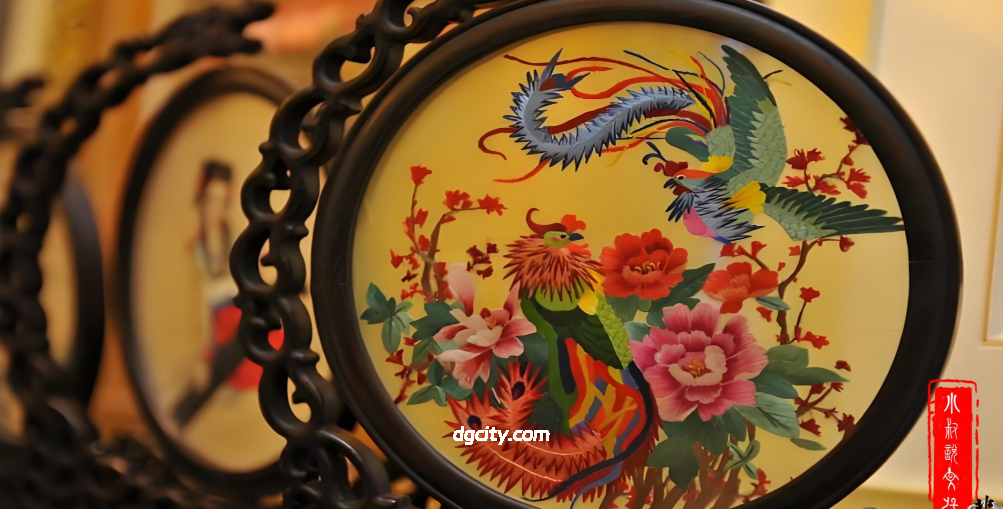
Nowadays, Chongqing Shu Embroidery is embracing innovative development while adhering to traditional roots, breaking the niche status of intangible heritage and gaining wider popularity at home and abroad. Led by national and municipal inheritors like Huang Min and Kang Ning, a complete inheritance system has been established in Chongqing. Various activities such as intangible heritage courses in schools and communities, inheritance workshops and special exhibitions are held to cultivate young inheritors and solve the problem of talent shortage. Meanwhile, artisans keep innovating to integrate Chongqing Shu Embroidery into modern life, launching diversified products including cultural creations, clothing accessories, home decorations and souvenirs. These products retain traditional craftsmanship while meeting modern aesthetic and practical needs, making this thousand-year-old embroidery integrate into daily life.
For tourists and Culture lovers, Chongqing Shu Embroidery is not only a collectible intangible cultural heritage artwork, but also a key window to understand Bayu Culture. In intangible heritage workshops and cultural and creative blocks in Yuzhong and Jiulongpo Districts, visitors can watch artisans embroider on site, experience simple embroidery courses, and make their own small works. Whether collecting high-quality masterpieces or purchasing distinctive cultural souvenirs, Chongqing Shu Embroidery carries the cultural heritage of the mountain city and the ingenuity of artisans. It is a must-try intangible heritage experience during a trip to Chongqing. From thousand-year heritage to contemporary revival, Chongqing Shu Embroidery connects the past and present of Bayu culture with tiny needles, shining brightly as a delicate cultural card of Chongqing to the world.




暂无评论内容