




In the upper and middle reaches of the Jialing River in northeastern Sichuan, there is a bright pearl of ancient cities——Langzhong Ancient City, which belongs to Nanchong City. Known as one of China’s Four Great Ancient Cities together with Lijiang in Yunnan, Pingyao in Shanxi and Shexian in Anhui, it is also praised by experts as “the best-preserved ancient city in China”, carrying the memory of Bashu civilization for more than 2,300 years and being a living Museum of history.
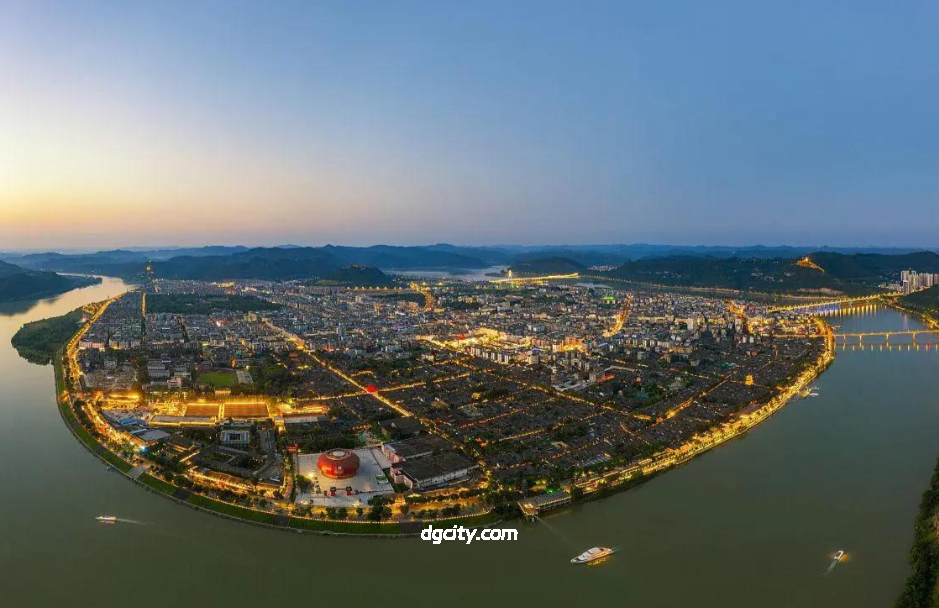
Langzhong Ancient City has a profound and long history. As early as the Warring States Period, it was the capital of the ancient Ba State. Since then, it has been the seat of prefectures, states, governments and circuits in successive dynasties. In the late Ming and early Qing dynasties, it even served as the capital of Sichuan Province for 20 years, being the political, economic and cultural center of northern Sichuan. Since King Huiwen of Qin established Langzhong County, this ancient city has experienced thousands of years of vicissitudes, but it has always retained the urban pattern of the Tang and Song dynasties and the architectural style of the Ming and Qing dynasties. The core area is nearly 2 square kilometers, with more than 90 historical streets crisscrossing and more than 100 ancient residential courtyards of the Ming and Qing dynasties scattered in an orderly manner. The blue tiles, gray walls and overhanging eaves are engraved with the traces of time in every detail.
As a typical example of “harmony between man and nature” in ancient Chinese city site selection, Langzhong Ancient City has a unique feng shui Culture. Surrounded by mountains on all sides and water on three sides, the Jialing River winds around the city like a green ribbon, connecting the ancient city with scenic spots such as Jinping Mountain, Baita Mountain and Tengwang Pavilion, forming an excellent pattern of “mountains surrounding four sides and water surrounding three sides”. It has been known as “Langyuan Fairyland” since ancient times. Taking Zhongtian Tower as the feng shui coordinate, the streets and lanes spread around in a “Tianxin Ten Roads” pattern with it as the axis. The architectural layout strictly follows the feng shui principles, integrating northern and southern styles to form unique architectural groups such as half-pearl, character “pin” and character “duo” shapes. Wandering in it, you can not only feel the natural beauty of mountains and rivers dependent on each other, but also experience the ancient people’s profound understanding of feng shui philosophy.
The integration of diverse Cultures makes Langzhong Ancient City more charming. The Three Kingdoms culture has left a deep impression here. Zhang Fei, a famous general of the Shu-Han Dynasty, guarded Langzhong for seven years and was buried here after his murder. Han Huanhou Temple (Zhang Fei Temple) was built to commemorate him. The temple is surrounded by evergreen pines and cypresses, solemn and solemn, retaining many cultural relics and sites related to Zhang Fei, telling the heroic legends of the Three Kingdoms period. The imperial examination Culture is also brilliant. Langzhong is the place with the most number one scholars in Sichuan, known as the “Hometown of Number One Scholars”. As the best-preserved and largest imperial examination Museum in China, Chuanbei Daogongyuan completely retains the examination rooms, Zhigong Hall and other buildings. Here, you can seem to see the joys and sorrows of ancient scholars who studied hard for ten years and achieved success in the imperial examination.
In addition, Langzhong is also the “Hometown of Chinese Spring Festival Culture”. Luo Xiahong, an astronomer of the Western Han Dynasty, was born here. He formulated the “Taichu Calendar” and established the first day of the first lunar month as the beginning of the year, laying the time foundation for the Spring Festival. Every Spring Festival, the ancient city holds a variety of folk activities, and folk programs such as “Liang Huaxie” (Bright Flower Shoes) have even appeared on the CCTV Spring Festival Gala, making Langzhong Spring Festival culture known to the whole country. The fireworks of the ancient city are also touching. Special delicacies such as Baoning Vinegar, Zhang Fei Beef and Baoning White Sugar Steamed Buns are famous inside and outside Sichuan. Wandering in the ancient streets such as Dajie Street and Shanghua Street, the aroma of vinegar and meat interweaves, and the laughter in the teahouses and the folk cries on the streets make this millennium-old ancient city full of vitality.
Today, Langzhong Ancient City has become a national 5A-level tourist attraction and a national historical and cultural city. It has both the natural beauty of mountains and rivers, the humanistic charm accumulated over thousands of years, the weight of history and the warmth of life. Here, you can climb Zhongtian Tower to overlook the whole ancient city, visit Zhang Fei Temple to cherish the memory of heroes, wander around Gongyuan to experience the imperial examination, taste special delicacies to feel the fireworks, walk on the bluestone roads and stop by the Jialing River to understand the millennium-old cultural context of the Bashu land and feel the unique charm of Langzhong Ancient City.


暂无评论内容