




In Shanghai, a city with both classical heritage and modern vitality, there is an intangible cultural heritage craft that uses wool as ink and needles as brushes to outline thousands of scenes on linen, precipitating a century of Shanghai-style elegance – it is Shanghai Wool Embroidery. As a distinctive embroidery category outside China’s Four Great Embroideries, Shanghai Wool Embroidery has developed from a folk handicraft to a national intangible cultural heritage with its exquisite stitches, rich colors and full texture. After more than a century of inheritance and innovation, it still shines with the light of craftsmanship and has become an indispensable symbol of Shanghai-style Culture.
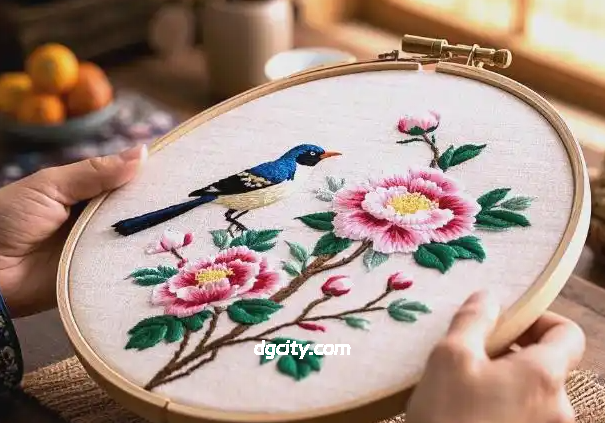
The origin of Shanghai Wool Embroidery is closely related to the opening of Shanghai as a treaty port in modern times, and its history can be traced back to the Guangxu period in the late 19th century. At that time, Western missionaries brought European wool embroidery craftsmanship to Shanghai, which was initially only used to decorate altars and tapestries in churches. With the integration of Chinese and Western Cultures, this craftsmanship gradually spread to the people. Folk artists improved and innovated European wool embroidery by combining the essence of Chinese traditional Embroidery stitches and aesthetic tastes, abandoning the cumbersome and rigid patterns of Western wool embroidery, and integrating the gentle artistic conception of the Jiangnan water towns and the fashion elements of Shanghai-style cities, thus gradually forming a unique style of Shanghai Wool Embroidery. During the Republic of China, Shanghai Wool Embroidery entered its heyday, with numerous wool embroidery workshops and stores. Its products not only supplied the domestic market but also were exported to Europe, America, Southeast Asia and other places, becoming an important export handicraft in Shanghai at that time, known as the “Pearl of Oriental Wool Embroidery”.
The unique charm of Shanghai Wool Embroidery is first reflected in its strict material selection and exquisite craftsmanship. In terms of material selection, the quality of wool directly determines the texture and vitality of wool embroidery works. The wool used in Shanghai Wool Embroidery is high-quality pure wool or silk wool, which has undergone multiple processes such as dyeing, degreasing and softening. It has bright colors, soft hand feel, wear resistance and non-fading, and can present thousands of different tones, which can accurately restore the color levels of all things in nature. The base material is mostly linen or cotton cloth with fine texture and strong toughness, ensuring that the wool does not fall off easily during embroidery and allowing the works to be preserved for a long time. In terms of craftsmanship, Shanghai Wool Embroidery adopts a variety of stitches such as “half-stitch embroidery”, “full-stitch embroidery”, “mixed-stitch embroidery” and “random-stitch embroidery”. Among them, the most distinctive is “mixed-stitch embroidery”. By alternately inserting wool of different colors, artists skillfully transition colors, making the color gradient of the work natural and highly three-dimensional, like a vivid oil painting. A complete Shanghai Wool Embroidery work often takes artists months or even years to embroider carefully stitch by stitch. Every inch of stitches embodies the patience and craftsmanship of the artists. The saying “Thousands of stitches weave beautiful brocade, and every stitch shows true feelings” is a vivid portrayal of the craftsmanship of Shanghai Wool Embroidery.
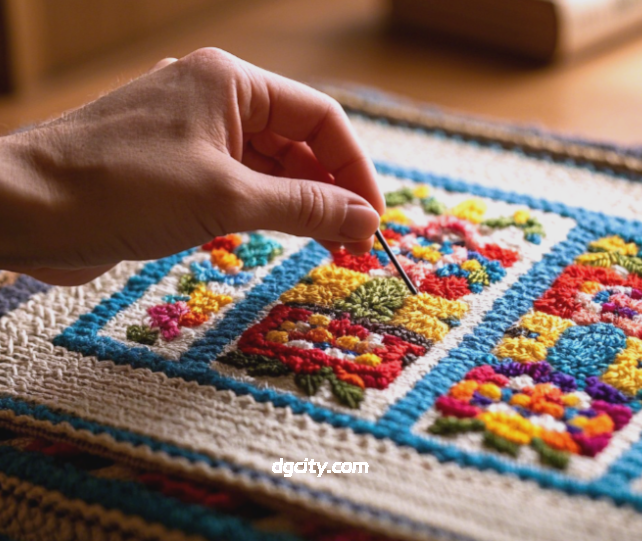
Compared with other embroidery categories, Shanghai Wool Embroidery has distinct artistic characteristics, integrating ornamental and practical value. In artistic expression, Shanghai Wool Embroidery has a wide range of themes, covering landscapes, flowers, birds, fish and insects, portraits, folk customs, famous paintings and many other fields. It can not only restore the elegant artistic conception of classical calligraphy and painting but also show the prosperity of modern cities and reproduce the artistic essence of world-famous paintings. Its works are highly three-dimensional with rich and full colors. The fluffy texture of the wool makes the picture more layered and appealing. From a distance, it looks like a three-dimensional oil painting; close up, you can feel the delicacy and refinement of the stitches. In terms of practicality, Shanghai Wool Embroidery has a variety of product forms, including works of art for appreciation and collection, such as tapestries, ornaments and portraits, as well as practical items integrated into daily life, such as cushions, scarves, handbags and tablecloths, allowing the intangible cultural heritage craftsmanship to truly enter ordinary people’s homes and realize the perfect integration of art and life.
As a national intangible cultural heritage, Shanghai Wool Embroidery is not only an exquisite handicraft but also carries profound cultural connotations, serving as a vivid carrier of Shanghai-style Culture. The core of Shanghai-style culture is “inclusiveness and pragmatic innovation”, which is fully reflected in the development history of Shanghai Wool Embroidery. Originating from Western craftsmanship, it takes root in the soil of Chinese traditional culture, integrates the essence of Chinese and Western cultures, retains the craftsmanship spirit of traditional embroidery, and absorbs the fashion elements of modern art, becoming a model of the integration of Chinese and Western cultures. At the same time, Shanghai Wool Embroidery also carries the life memories and emotional sustenance of Shanghai people. The wool embroidery works of the Republic of China recorded the urban style and folk customs of Shanghai at that time, while the contemporary wool embroidery works show the development changes and humanistic feelings of Shanghai in the new era, becoming an important carrier of inheriting urban memory and promoting Shanghai-style culture.
After a century of vicissitudes, Shanghai Wool Embroidery has gone through ups and downs in the tide of the times. Today, under the background of intangible cultural heritage protection and cultural inheritance, it is radiating new vitality. To protect and inherit this ancient craftsmanship, Shanghai has not only established a wool embroidery intangible cultural heritage protection center but also cultivated a group of young wool embroidery inheritors. On the basis of inheriting traditional craftsmanship and style, they continue to innovate, combining modern design concepts with wool embroidery craftsmanship, and developing more products that meet the aesthetic needs of contemporary people, making Shanghai Wool Embroidery take a path of “development through inheritance and innovation through development”. At the same time, through various forms such as holding wool embroidery art exhibitions, intangible cultural heritage experience activities, and entering campuses and communities, more people can understand and love Shanghai Wool Embroidery, allowing this century-old craftsmanship to be passed down from generation to generation. In addition, Shanghai Wool Embroidery has repeatedly represented China’s intangible cultural heritage to participate in international cultural exchange activities, showing the unique charm of Chinese handicrafts to the world and promoting the exchange and integration of Chinese and foreign cultures.
A century of wool embroidery, inherited with craftsmanship. Shanghai Wool Embroidery is not only an exquisite handicraft but also an artistic treasure carrying the integration of Chinese and Western cultures and engraved with Shanghai-style elegance. After more than a century of trials and hardships, it has been inherited and developed in the stitches of artists, witnessing the changes of Shanghai and continuing the cultural root of Chinese traditional handicrafts. Today, this ancient intangible cultural heritage craftsmanship is integrating into the life of the new era with a new attitude, continuing the century-old craftsmanship legend with the tenderness of wool and the delicacy of stitches, and becoming the most touching cultural mark and artistic glory in Shanghai, an international metropolis.



暂无评论内容