




At No. 168 Mengzhuiwan Street, Chenghua District, Chengdu, stands a landmark building that combines a sense of technology with humanistic charm — Tianfu Panda Tower, more commonly known as 339 TV Tower by the public. With a total height of 339 meters, this high tower is not only the tallest tower in Western China, but also a vivid business card of Chengdu’s urban image, carrying the memories of several generations and witnessing the rapid development of Rongcheng (Chengdu’s nickname). From project approval and construction to multiple renamings, from a single-function radio and television transmission tower to a comprehensive cultural and tourism landmark, every stage of Tianfu Panda Tower is closely linked to the urban pulse of Chengdu.
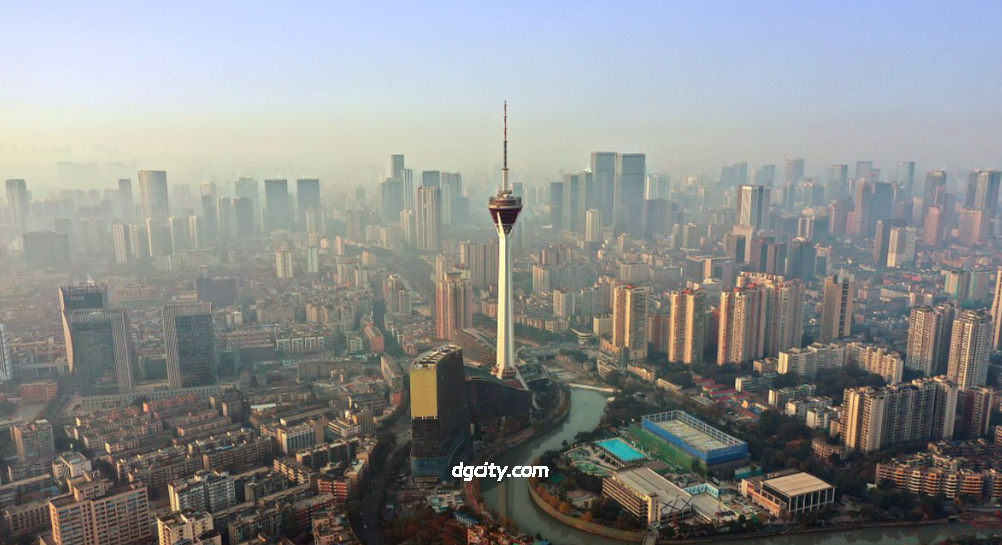
The construction process of Tianfu Panda Tower was full of twists and turns, but it also demonstrated tenacity and perseverance. In the 1980s, to meet the needs of radio and television transmission in Chengdu and surrounding areas, the Party Group of Sichuan Provincial Bureau of Radio and Television made a decision to expand Sichuan TV Station and build a new Sichuan TV Station transmission base in 1983. In the same year, the State Development and Planning Commission included this project in Sichuan Province’s key construction projects. In January 1984, the Central Military Commission approved the selected site, and in September 1985, Sichuan Provincial Department of Radio, Film and Television basically completed the preliminary project preparation work. However, due to factors such as insufficient financial resources, the project was suspended after being approved in 1983. It resumed construction in 1991 and laid the foundation in 1992, but was suspended many times due to funding problems. It was not until 1997 that Sichuan Tower Chengxing Industrial Co., Ltd. was established and obtained a huge loan in 1998 that the project entered a continuous construction stage. The main project was completed in 2004, and the total height of the tower reached 339 meters in 2006, finally establishing its status as the tallest tower in Western China. On May 1, 2011, Tianfu Panda Tower held a lighting ceremony, and the main tower was opened to the public on September 15, 2013. Later, it was renamed twice: it was renamed Jinxiu Tianfu Tower in 2014 and officially named Tianfu Panda Tower in 2018, which was deeply bound with Chengdu’s panda Culture and became a more recognizable urban landmark.
As a building integrating traditional and modern elements, Tianfu Panda Tower has an ingenious design. Designed by Li Zhili and other designers from the Institute of Radio, Film and Television Ministry, the tower adopts a unique four-limb shape, breaking through the common cylindrical design. It has an octagonal shape with four external legs. The diagonal braces around the tower base assist the tower to rise from the ground, and the four legs gradually narrow upward along the diagonal, finally opening their four arms to the blue sky. It not only shows the straightness and grandeur of modern architecture, but also implies the flexibility and profoundness of Sichuan’s traditional Culture. The entire tower is composed of five parts: the tower base, the lower tower, the tower body, the upper tower and the antenna mast. It covers an area of 10 mu (about 6666.7 square meters) with a construction area of about 14,650 square meters. The Chengdu 339 commercial complex built on the tower covers a total area of 65 mu (about 43333.5 square meters) with a construction area of about 240,000 square meters, forming a comprehensive layout of “high tower + commerce” that integrates tourism, culture, entertainment, business and other functions.
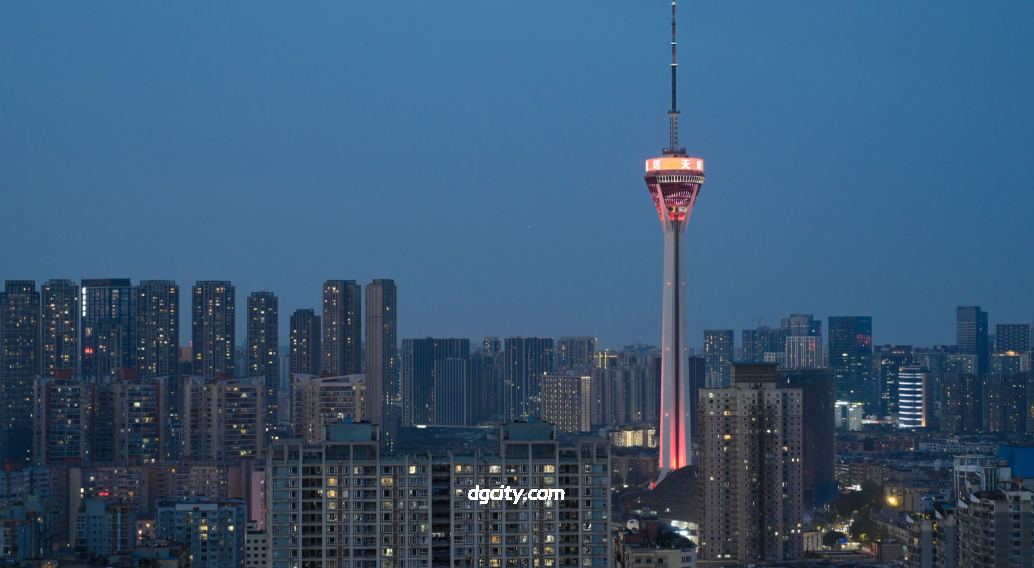
Tianfu Panda Tower has rich and diverse functions, which can not only meet the core needs of radio and television transmission, but also provide comprehensive cultural and tourism experiences for citizens and tourists. As the hub of radio, television and microwave transmission in Sichuan Province, the tower transmits 30 sets of radio and television programs including CCTV, Sichuan Provincial TV Station, Chengdu TV Station, digital mobile TV and mobile TV, covering a radius of 80 kilometers. At the same time, it provides comprehensive services for public security, fire protection, communication, earthquake and many other provincial and municipal departments, and is an indispensable “air hub” for urban operation. In terms of sightseeing experience, the tower is equipped with multiple characteristic areas: the indoor observation layer at 208 meters is equipped with electronic telescopes, somatosensory game consoles and other equipment, allowing a 360-degree view of Rongcheng’s scenery; the outdoor observation layer at 218 meters is equipped with transparent glass observation platforms in four directions. Standing on the transparent glass, you feel as if you are standing in the air, which can not only experience the thrills of high altitude, but also have a panoramic view of Chengdu’s urban style, making it a popular spot for high-altitude photography and proposals; the revolving restaurant at 213 meters is known as the “Sky-top Restaurant”, which can accommodate 200 people at the same time and provide more than 100 kinds of Chinese and Western dishes. The restaurant rotates once every 40 minutes, allowing you to enjoy a full-view urban landscape without moving, achieving a dual enjoyment of vision and taste.
Nowadays, although some areas of Tianfu Panda Tower are temporarily closed to the public due to operational factors, it is still one of the core landmarks of Chengdu’s night life. The night Economy circle formed around it continues the charm of this high tower. The Chengdu 339 Shopping Center at the bottom of the tower has many restaurants and bars, which are bright and lively when night falls; the surrounding Wangping Binhe Road, Xiangxiang Lane, Chenghua Park, Mengzhuiwan Swimming Pool and other scenic spots echo each other, forming a unique “339 night economy” scene, attracting countless tourists to experience the fireworks of Chengdu. From the mist in the early morning to the afterglow of the sunset in the evening, from the bright lights after nightfall to the dense fireworks in the late night, Tianfu Panda Tower has always stood by the Jinjiang River, witnessing the prosperity and tenderness of Chengdu, carrying the city’s memories and hopes, and becoming an unforgettable urban mark for everyone who visits Chengdu.

暂无评论内容