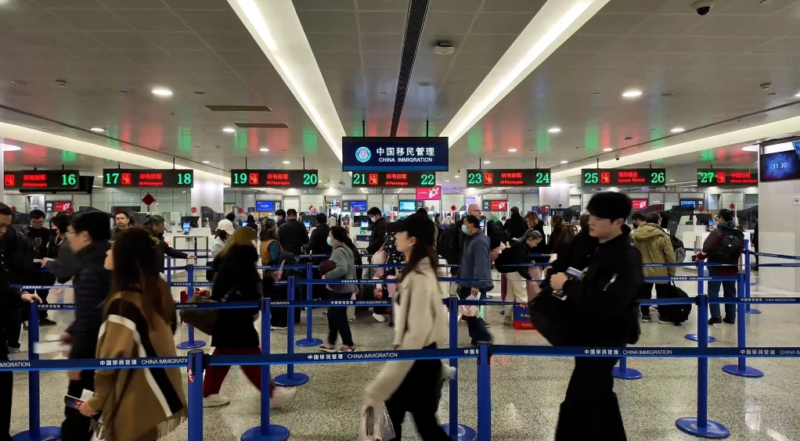





To respond to various sudden emergency scenarios and protect the legitimate entry rights and interests of foreign travelers in emergency situations, China has specially established emergency entry channels, focusing on three core emergency scenarios: humanitarian aid, Medical emergency for sudden illness, and relative funeral. Based on the relevant provisions of the Exit and Entry Administration Law of the People’s Republic of China, these channels simplify entry procedures, optimize review efficiency, and open exclusive channels to provide convenient and efficient emergency entry services for foreign travelers. In 2026, China continues to optimize emergency entry policies, further simplifying material requirements, shortening processing time limits, expanding the scope of application, clarifying the applicable conditions, required materials and handling procedures for various emergency scenarios, and opening up a “green channel” for emergency entry. This guide integrates the latest 2026 policies, takes practical operation as the core, detailedly interprets the whole-process key points of the three types of emergency entry scenarios, and is accompanied by synchronized Chinese and English content, with each article having more than 700 words. It helps foreign travelers quickly grasp entry rules in emergency situations, successfully complete customs clearance, and avoid process obstacles and illegal risks.
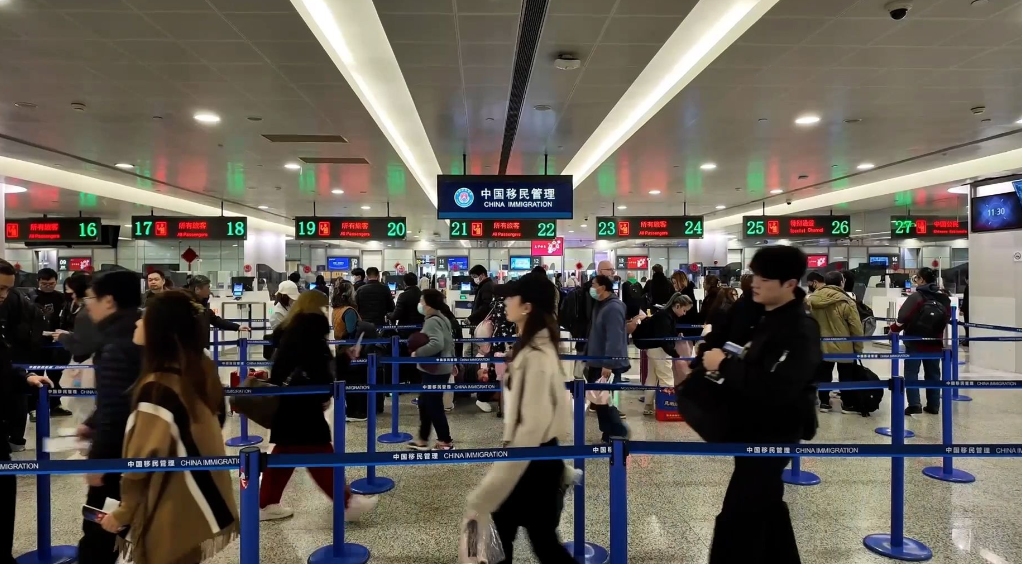
The core principle of China’s emergency entry channels is “handling urgent matters quickly and special matters specially”. All emergency entry applications must be based on real and urgent scenario needs. Applicants can apply for relevant procedures at port visa authorities entrusted by the Ministry of Public Security at ports approved by the State Council to handle port visa business. The whole process follows the requirements of legality, compliance, convenience and efficiency, ensuring emergency needs while preventing illegal entry risks. Although the applicable conditions for the three types of emergency scenarios are different, the overall handling process is roughly the same, including four links: preparing materials in advance, applying for emergency at the port, border inspection and customs clearance, and registration after entry. At the same time, exclusive convenience measures are set for different scenarios.
The first type is emergency entry for humanitarian aid, which is mainly applicable to scenarios where foreign citizens need to enter China urgently to participate in humanitarian aid-related work due to sudden situations such as natural disasters, major accidents and disasters, and public health emergencies in China. It mainly reflects the humanitarian spirit in China’s opening up and adapts to the needs of cross-border rescue cooperation. In 2026, this policy was further optimized to expand the scope of rescue subjects, covering not only foreign rescue personnel, but also related auxiliary personnel such as rescue material transporters and technical experts. At the same time, it simplified the requirements for rescue-related certification materials and improved processing efficiency.
In terms of applicable conditions, applicants must meet two core requirements: first, the purpose of entry is to participate in humanitarian aid-related work in China, including rescue of natural disasters such as earthquakes, floods and typhoons, disposal of major accidents and disasters such as fires and explosions, and prevention and control of public health emergencies; second, the applicant must be invited by a rescue organization, relevant government department or legitimate institution in China, with clear rescue responsibilities, work duration and relevant arrangements after entry, and shall not engage in activities unrelated to rescue in the name of humanitarian aid.
Required materials include: 1. Original and copy of a valid ordinary passport, with a remaining validity period of more than 6 months, no damage or expiration; 2. Emergency rescue invitation letter issued by the inviting organization in China, which shall indicate the qualification of the inviting unit, rescue scenario, applicant’s name, nationality, entry time, stay duration and rescue responsibilities. The invitation letter shall be stamped with the official seal of the inviting unit, and an electronic invitation letter may be provided in emergency situations (paper version to be supplemented later); 3. The applicant’s rescue-related qualification certificate (such as rescue personnel qualification certificate, technical expert title certificate, etc.). Auxiliary personnel without relevant qualifications shall provide an identity statement issued by the inviting organization; 4. Emergency entry application form, which can be collected and filled in on site at the port visa authority, or downloaded and filled in in advance through the official website of the China Visa Application Service Center to simplify the filling process; 5. One recent 2-inch bareheaded photo (no requirement on background color, which can be exempted in emergency situations and supplemented later).
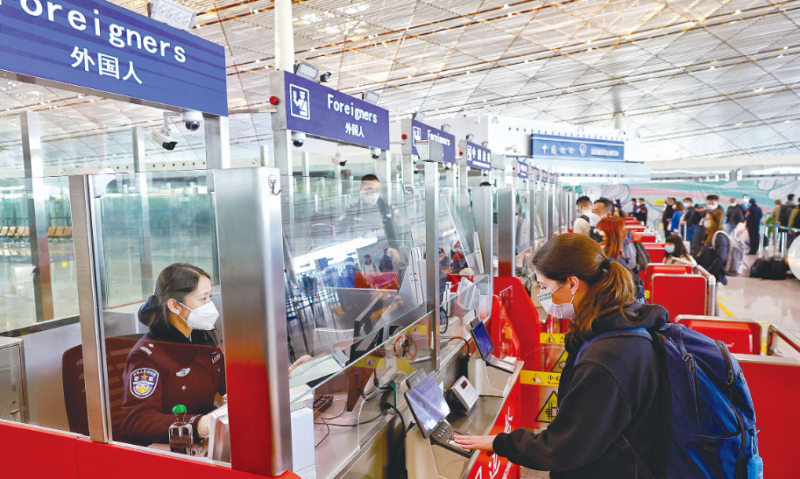
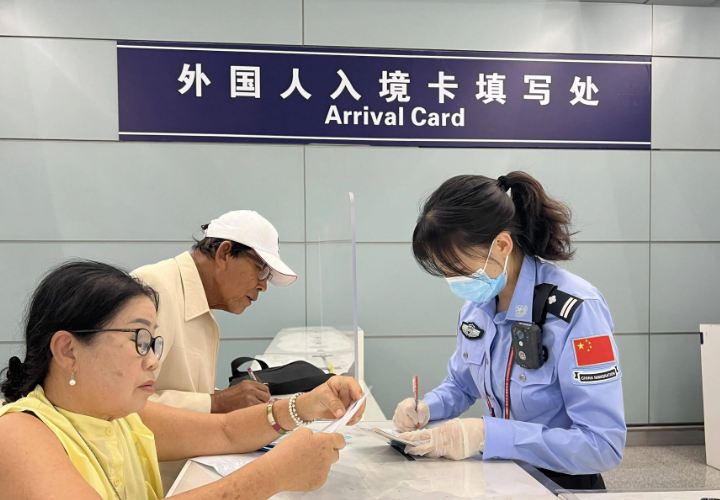
In terms of handling process, the “port expedited processing” mode is adopted. Applicants can directly arrive at designated ports in China (such as international airports in Beijing, Shanghai, Guangzhou, Shenzhen, etc., and major border ports), go to the exclusive window for emergency rescue of the port visa authority to submit materials. The staff will review on site, and issue the port visa on the spot after approval. The processing time is no more than 30 minutes, and can be shortened to 15 minutes in emergency situations. During customs clearance, applicants can complete inspection through the “exclusive channel for emergency entry”. The border inspection authority simplifies the inspection process, no need to fill in an entry registration card (combined with the 2026 entry policy optimization measures), and quickly completes face recognition, fingerprint verification and material verification, with customs clearance time no more than 5 minutes. In terms of stay duration, the port visa is valid for a single entry, and the stay duration is determined according to the needs of rescue work, usually 7-30 days. If it is necessary to extend the stay duration, the applicant shall apply to the local public security entry-exit administration authority 7 days before the expiration of the stay period with a work extension explanation issued by the rescue organization. Each extension shall not exceed 15 days, and the cumulative extension shall not exceed 2 times to ensure the smooth development of rescue work.
The second type is emergency entry for Medical treatment of sudden illness, which is applicable to scenarios where a foreign traveler himself/herself or his/her immediate relative in China suffers from a sudden serious illness or injury and needs to enter China urgently for medical treatment, accompaniment or visit. It mainly protects the life and health rights and interests of foreign travelers, simplifies the entry process related to emergency medical treatment, and gains time for treatment. This policy clearly distinguishes between two situations: “personal medical treatment” and “relative accompaniment/visit”, and formulates targeted material and process requirements respectively. At the same time, combined with the policy of canceling mandatory health declaration implemented since 2023, it optimizes the inspection process related to medical treatment.
Applicable conditions are divided into two situations: first, the applicant himself/herself suffers from a sudden serious illness or injury and needs to enter China urgently for treatment in China, and a hospital with corresponding treatment qualifications in China agrees to receive him/her. Failure to enter China on time without a valid visa will affect the treatment effect; second, the applicant’s immediate relative (spouse, parent, child, grandparent, grandchild) in China suffers from a sudden serious illness or injury, and the applicant needs to enter China urgently for accompaniment or visit. The hospital issues a relevant critical illness notice or serious illness certificate, and the relative really needs to be accompanied and taken care of.
Required materials vary slightly according to the purpose of entry: for personal Medical treatment, it is necessary to provide: original and copy of a valid ordinary passport, emergency medical treatment invitation letter issued by a hospital with treatment qualifications in China (indicating hospital qualifications, applicant’s condition, treatment plan and expected treatment duration), hospital diagnosis certificate or critical illness notice (electronic certificate can be used in emergency), applicant’s past medical records (brief version to facilitate doctors to understand the condition), emergency entry application form and recent bareheaded photo (can be exempted in emergency situations). For relative accompaniment/visit, it is necessary to provide: original and copy of a valid ordinary passport, immediate relative relationship certificate with the visited relative (marriage certificate, birth certificate, kinship certificate issued by a public security police station or kinship notarization certificate, etc., referring to relevant policy requirements), critical illness notice, serious illness diagnosis certificate or hospitalization certificate of the visited relative issued by a hospital in China, emergency entry application form. In emergency situations, photos and some certification materials can be exempted and supplemented later.
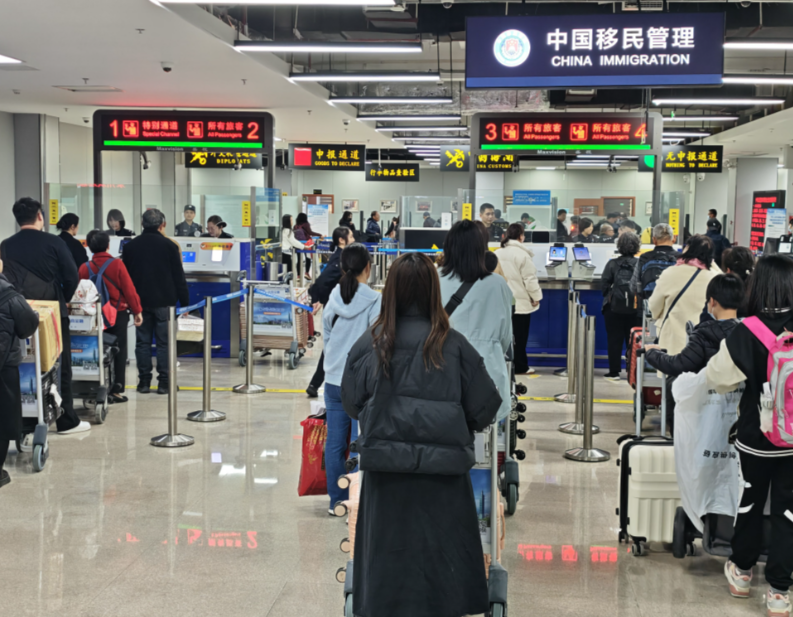
The handling process also adopts “port expedited processing”. Applicants can directly arrive at the designated port, go to the exclusive window for sudden illness of the port visa authority to submit materials. The staff will give priority to review, focusing on verifying medical treatment-related certificates and relative relationship certificates. After approval, the port visa will be issued on the spot, with a processing time of no more than 30 minutes. During customs clearance, you can quickly pass through customs through the “exclusive channel for emergency entry”. If the applicant is seriously ill, border inspection staff can conduct on-site inspection or open a green channel to assist in completing customs clearance procedures. In terms of stay duration, the stay duration for personal medical treatment is determined according to the treatment needs, usually 15-30 days. It can be extended with a treatment extension certificate issued by the hospital, with a cumulative stay of no more than 90 days; the stay duration for relative accompaniment/visit is usually 7-15 days. It can be extended once with a condition continuation certificate issued by the hospital, with an extension of no more than 15 days. It should be noted that since November 1, 2023, China has canceled the mandatory entry health declaration. However, if the applicant has symptoms of infectious diseases such as fever and cough, he/she must take the initiative to report to the customs staff and cooperate in conducting health and quarantine procedures to avoid affecting entry (combined with the policy in Summary 2).
The third type is emergency entry for relative funeral, which is applicable to scenarios where the immediate relative or close relative of a foreign traveler in China passes away, and the applicant needs to enter China urgently to handle funeral affairs and pay homage to the relative. It mainly reflects humanistic care, simplifies the relevant entry process, and allows foreign travelers to handle the relative’s funeral affairs in a timely manner. This policy clarifies the scope of close relatives and refines the requirements for funeral-related certification materials to ensure convenient and compliant procedures.
Applicable conditions: the applicant’s immediate relative (spouse, parent, child, grandparent, grandchild) or close relative (sibling, spouse’s parent) in China passes away, and the applicant needs to enter China urgently to handle funeral affairs (such as holding a funeral, cremation, inheritance handover, etc.) or pay homage to the relative. The entry time is urgent, and it is impossible to apply for a regular visa in advance, so it is really necessary to enter China through the emergency entry channel.
Required materials include: 1. Original and copy of a valid ordinary passport, with a remaining validity period of more than 6 months; 2. Relative relationship certificate with the deceased relative (marriage certificate, birth certificate, kinship notarization certificate, kinship certificate issued by a public security police station, etc., referring to relevant kinship certificate requirements). In emergency situations, an electronic version can be provided, and a paper version can be supplemented later; 3. Death certificate, cremation certificate or funeral affair certificate of the deceased relative issued by a relevant institution in China, indicating the time and place of death and funeral arrangements; 4. Emergency entry application form, filled in on site or downloaded and filled in in advance; 5. One recent 2-inch bareheaded photo, which can be exempted in emergency situations.
The handling process is the same as the previous two scenarios, adopting port expedited processing. After arriving at the designated port, the applicant goes to the exclusive window for relative funeral of the port visa authority to submit materials. The staff reviews quickly, focusing on verifying the relative relationship certificate and death certificate. After approval, the port visa is issued on the spot, with a processing time of no more than 30 minutes. During customs clearance, you can quickly complete inspection through the exclusive emergency entry channel, simplify the process, and no need to fill in an entry registration card. The stay duration is usually 7-15 days. If it is necessary to extend the stay duration (such as handling inheritance, subsequent funeral affairs, etc.), the applicant shall apply to the local public security entry-exit administration authority 7 days before the expiration of the stay period with relevant certification materials (such as inheritance handling certificate, funeral affair extension explanation) for one extension, no more than 15 days, and the cumulative stay shall not exceed 30 days.
To help foreign travelers quickly solve policy questions in emergency situations and avoid illegal risks, the following high-frequency FAQs are sorted out: 1. Do I need to make an appointment in advance for emergency entry? A: No appointment is required. You can directly arrive at the designated port to apply on site. The port has exclusive windows for priority processing; 2. Can I enter China first and supplement materials if the materials are incomplete in an emergency? A: Yes. You can enter China first if the core materials (passport, core certificates) are complete, and the secondary materials (photos, paper invitation letters, etc.) can be supplemented within 3 working days after entry; 3. Is there any difference between the emergency entry port visa and the regular visa? A: There is no essential difference. Both are legal entry documents. Only the handling channel is port expedited, the stay duration is determined according to the emergency scenario, and the rights and interests after entry are the same; 4. What are the consequences of illegal stay or engaging in unrelated activities in the name of emergency entry? A: It will be regarded as illegal entry, facing penalties such as warning, fine and ordered departure within a time limit. In serious cases, it will be included in China’s entry blacklist, restricting the eligibility to travel to China for 1-3 years; 5. What procedures do I need to go through during treatment after entering China due to sudden illness? A: Within 7 days after entry, you need to go through temporary accommodation registration at the local public security entry-exit administration authority with the hospital diagnosis certificate and port visa, and no additional registration procedures are required.
Complete List of China’s Designated Emergency Entry Ports (2026 Latest Version)
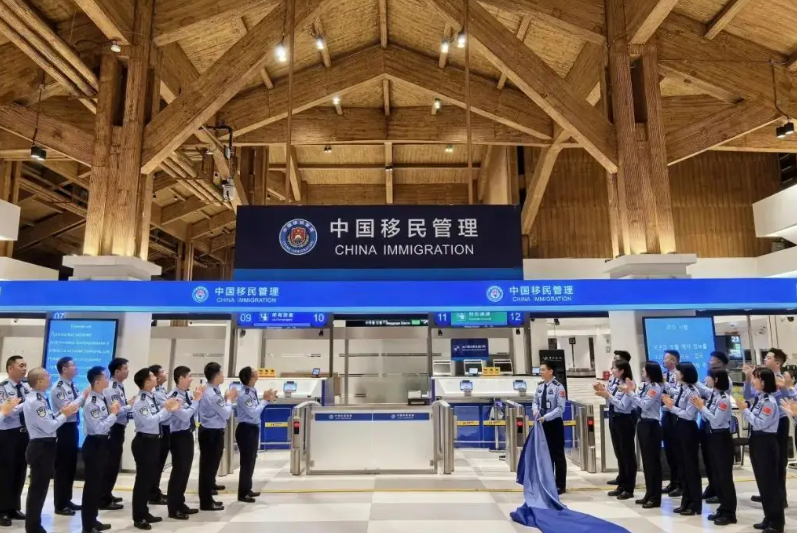
The following ports are all designated ports approved by the State Council to handle port visa business. They can handle emergency entry procedures for three scenarios: humanitarian aid, medical emergency for sudden illness, and relative funeral. They are equipped with exclusive windows and emergency customs clearance channels. Foreign travelers can choose the nearest port to enter China according to their itinerary.
I. International Airport Emergency Entry Ports (Handling All Types of Emergency Entry Scenarios)
- Beijing: Beijing Capital International Airport, Beijing Daxing International Airport
- Shanghai: Shanghai Pudong International Airport, Shanghai Hongqiao International Airport
- Guangdong: Guangzhou Baiyun International Airport, Shenzhen Bao’an International Airport, Zhuhai Jinwan International Airport
- Sichuan: Chengdu Shuangliu International Airport, Chengdu Tianfu International Airport
- Zhejiang: Hangzhou Xiaoshan International Airport
- Jiangsu: Nanjing Lukou International Airport, Suzhou Shuofang International Airport
- Fujian: Xiamen Gaoqi International Airport, Fuzhou Changle International Airport
- Shandong: Qingdao Liuting International Airport, Jinan Yaoqiang International Airport
- Liaoning: Shenyang Taoxian International Airport, Dalian Zhoushuizi International Airport
- Yunnan: Kunming Changshui International Airport
- Shaanxi: Xi’an Xianyang International Airport
- Chongqing: Chongqing Jiangbei International Airport
II. Border Emergency Entry Ports (Including 2026 Latest Reopened Ports, Focusing on Nearby Emergency Entry)
- Tibet: Gyirong Port (reopened on January 1, 2026, facing Nepal, handling all types of emergency entry, connecting China Gyirong – Nepal Rasuwagadhi Port), Zhangmu Port
- Inner Mongolia: Manzhouli Port, Erenhot Port
- Yunnan: Ruili Port, Wanding Port, Mohan Port
- Guangxi: Dongxing Port, Pingxiang Youyiguan Port
- Heilongjiang: Suifenhe Port, Heihe Port
- Jilin: Hunchun Port
- Xinjiang: Horgos Port, Alashankou Port
Note: As the latest reopened border port in 2026, Gyirong Port has fully opened exclusive windows for emergency entry, which can quickly handle various emergency entry applications for foreign travelers from Nepal and neighboring countries, with the same customs clearance efficiency as other designated ports.








暂无评论内容